From Paper to Pixels: How Are Libraries in Hanoi Navigating Digital Transformation?
The demand for remote research and learning is increasing rapidly, while many libraries in Hanoi still operate based on the logic of physical stacks and on-site service. Libraries in Hanoi are implementing digital transformation as an official mandate, but the more critical questions remain: To what extent has digitization reached, whom does it serve, and why do many resources remain “closed” despite expectations?
“Digitization” as a Mandate: Moving from Messaging to Practice
Library digitization is no longer a movement or a series of fragmented pilot projects. At the national level, Decision 206/QD-TTg established the digital transformation of the library sector as a program with specific goals, tasks, and a roadmap to 2030, emphasizing the building of digital information resources, the development of digital libraries, and online services to expand accessibility anytime, anywhere.
At the specialized implementation level, Decision 2175/QD-BVHTTDL of the Ministry of Culture, Sports, and Tourism shifted digitization from “encouraged” to “planned,” pulling the library system into a regular workflow rather than local, ad-hoc efforts. For Hanoi, communications from the Department of Culture and Sports show that library digital transformation is positioned as a specific line of work: spreading initiatives, promoting practice models, and gradually forming the habit of using digital services among the reading community.
Viewed through the spirit of ‘Hanoi – Creative City,’ this is not merely a technological story. Libraries, if correctly ‘elevated’ into the digital environment, will become an urban knowledge infrastructure: a place where citizens access learning materials, young people find creative inspiration, and marginalized groups are offered an open door to information..
How are libraries in Hanoi navigating digitization?
Reality in Hanoi shows that the question ‘What to digitize?’ is just as critical as ‘How to digitize?’. On the Hanoi Public Library website, the information structure, professional sections, and search tools reflect a priority on building document groups with high demand and the potential to be organized into digital collections for optimized searching.
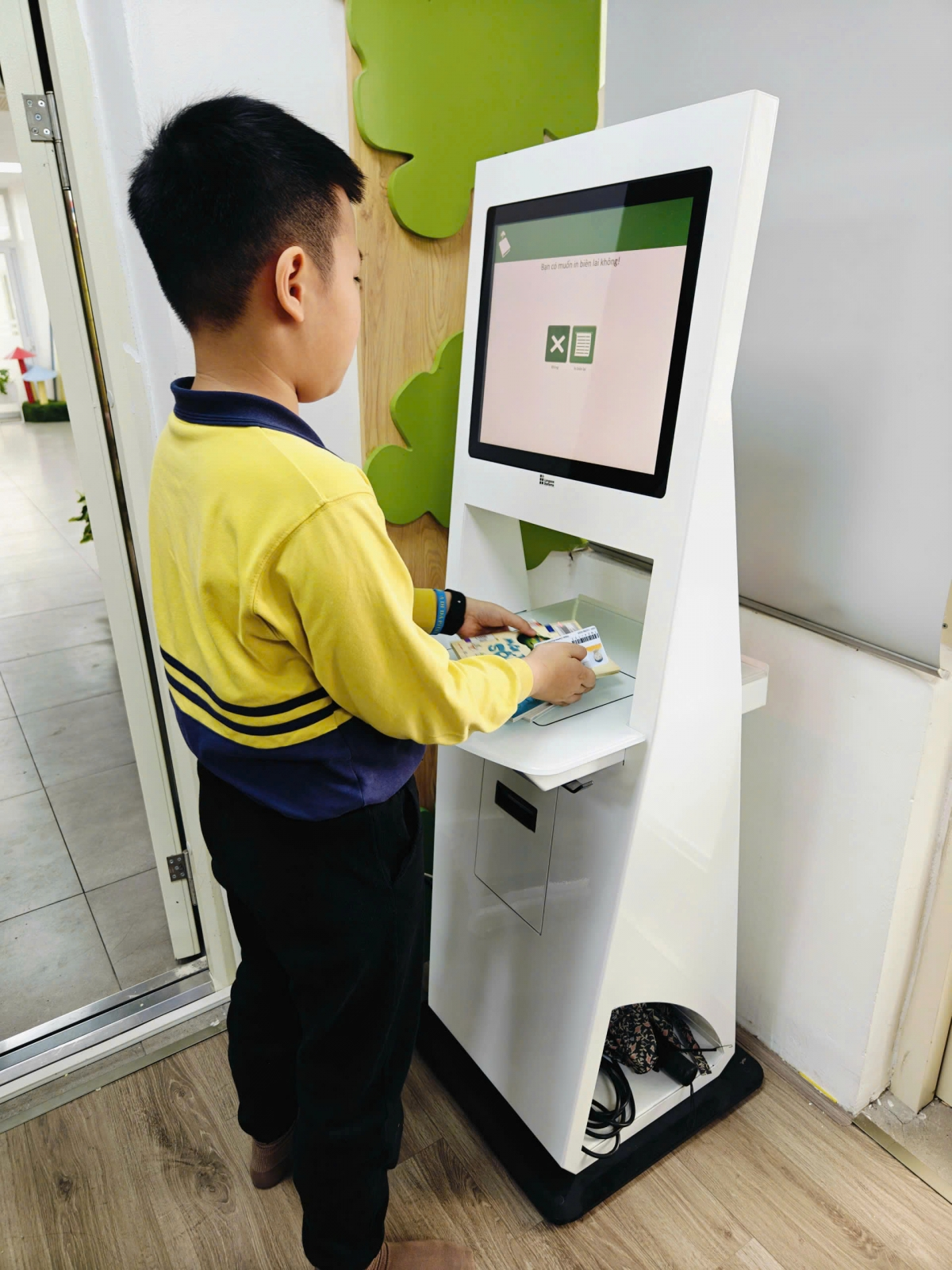
Readers using the self-service borrowing and returning system at the Hanoi Library. Photo: Hanoi Library
One observable trend is digitization tailored to specialized reader groups. The ‘Audiobooks for the Visually Impaired’ section demonstrates how libraries are organizing audio repositories by theme, expanding knowledge accessibility for those disadvantaged by printed materials. This represents a critical touchpoint: digitization is not merely a change in format, but a transformation of service toward greater inclusivity.
At the ‘service’ layer, digitization in Hanoi is moving toward building digital databases and shifting service touchpoints online. The Hanoi Public Library’s portal allows for multi-modal searches—ranging from simple and advanced queries to full-text, excerpts, and periodical searches. This has created a distinct shift: from ‘visiting the library to discover resources’ to ‘discovering resources before choosing the mode of access.’

The search, borrowing, and reading processes are streamlined for speed and convenience. Photo: Hanoi Library
However, a portion of the content and functionality remains behind login walls or requires registered reader accounts. This hybrid physical-digital model reflects current realities: while digitization enhances searchability and preparation, access to digital content remains contingent upon library policies and the legal framework of specific resource groups. Consequently, many libraries prioritize the digitization of ‘endogenous’ materials, local geography collections, or specialized institutional data—aligning with professional digital library orientations that emphasize ‘unique strengths’ through curated digital collections.
From ‘Digitized’ to ‘Usable’ in Practice: Three Bottlenecks and the Connectivity Challenge
For users, the most apparent value of digitization is the capacity for remote research: verifying bibliographic information, checking document status, and orienting their choices before arriving at the library. This process minimizes on-site search time and reduces reliance on “chance” in crowded physical stacks. Furthermore, resources such as audiobooks for the visually impaired demonstrate that digitization can foster greater equity in knowledge access if services are designed correctly.

A corner of Hanoi Library. Photo: Vietnam News Agency
However, for the transition “from paper to pixels” to truly represent an upgrade for urban intellectual life, Hanoi is facing three major limitations.
First is Copyright. Many documents may have been digitized for preservation or internal use but cannot be provided broadly online due to copyright barriers and licensing mechanisms. This is a systemic bottleneck, rather than an issue unique to a single library.
Second are Infrastructure and funding. Digitization involves far more than just scanning documents. It encompasses storage, security, management software, operational personnel, and service maintenance costs. Disparities in investment levels across units lead to inconsistent digital service quality.
Third is the scope of access. Observations from the Hanoi Public Library’s search portal reveal that certain sections require reader account logins. This underscores a vital principle: digitization does not equate to ‘open access.’ In many instances, digitization has only reached the level of enhancing management capacity and search convenience, while access rights remain strictly controlled.
Consequently, a pivotal challenge emerges for a creative city: Inter-library connectivity. If every library builds its own digital repository, portal, and data standard, resources will remain fragmented, and users will continue to ‘fumble’ through multiple systems. While connectivity goals have been established in implementation documents, reality often hits the barriers of disparate platforms, resources, and data organization methods across units. Therefore, the question is not merely ‘how much has been digitized,’ but ‘how much can a user find and actually use’ when conducting interdisciplinary or inter-library research.
Digitization in Hanoi’s libraries is underway and has created visible shifts, from online search portals to resources serving specialized reader groups. However, this remains a foundational stage: increasing digital capacity to organize and search resources, yet unable to expand access as expected due to copyright barriers, resource constraints, and system connectivity issues. For Hanoi, the transition ‘from paper to pixels’ is not just about changing storage methods; it is an urban challenge concerning the right to access knowledge, network coordination capacity, and the quality of public services in the digital age.
Source:
- https://vanban.chinhphu.vn/default.aspx?docid=202657&pageid=27160&utm_source=chatgpt.com
- https://thuvienphapluat.vn/van-ban/Cong-nghe-thong-tin/Quyet-dinh-206-QD-TTg-2021-Chuong-trinh-chuyen-doi-so-nganh-thu-vien-den-nam-2025-465106.aspx?utm_source=chatgpt.com
- https://thuvien.hanoi.gov.vn/?utm_source=chatgpt.com
- https://thuvienphapluat.vn/van-ban/Cong-nghe-thong-tin/Quyet-dinh-2175-QD-BVHTTDL-2021-Ke-hoach-chuyen-doi-so-nganh-thu-vien-dinh-huong-den-2030-482454.aspx?utm_source=chatgpt.com
- https://vov2.vov.vn/van-hoa-giai-tri/chuyen-doi-so-nganh-thu-vien-nhung-co-hoi-va-thach-thuc-51355.vov2?utm_source=chatgpt.com
- https://sovhtt.hanoi.gov.vn/lan-toa-sang-kien-chuyen-doi-so-trong-nganh-thu-vien/?utm_source=chatgpt.com