Hanoi Creative Design Festival: A Journey Toward a Sustainable Ecosystem and Community Connectivity
Over four years, from 2021 to 2024, the Hanoi Creative Design Festival has transformed from a “Creative Week” within a single Old Quarter heritage site into the capital’s leading large-scale creative event. This evolution reflects Hanoi’s journey in shaping its identity as a Creative City: opening heritage doors, activating creative communities and citizens, awakening urban spaces, and turning public areas into art stages; ultimately connecting networks to make creativity an integral part of life in the capital.
In a global context where cities compete through identity and cultural capacity, the development of the Hanoi Creative Design Festival carries multi-fold significance: it is a cultural-tourism strategy and an opportunity to reposition Hanoi as a younger, more open, and more connected city. From this growth trajectory, the festival is moving toward a new milestone in 2026, when Hanoi aims to build a sustainable creative ecosystem on a city-wide scale, expanding activities across 12 cultural industry sectors and establishing a biennial festival model following international standards.
The Hanoi Creative Design Festival 2025–2026 marks a transition from a single event to an urban creative platform: connecting creative space networks, support mechanisms, cooperation models, and cultural infrastructure to allow creativity to occur continuously, not just during the festival season.
2021: The Genesis of ‘Creative Awakening Week’ – A Small Spark in the Heart of the Old Quarter
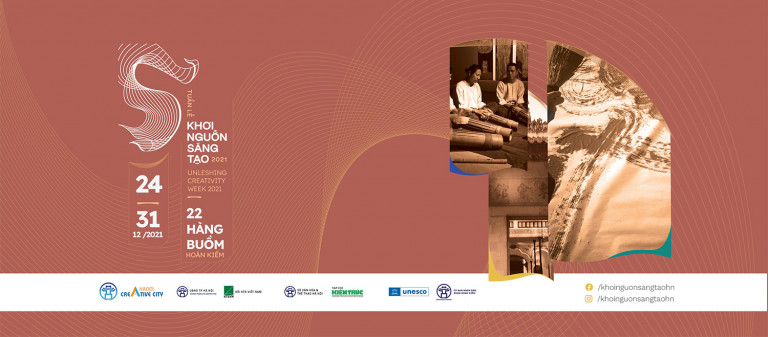
In 2019, Hanoi joined the UNESCO Creative Cities Network. By 2021, the city launched ‘Creative Awakening Week’ as an initial pilot. The primary venue was the Arts and Culture Center at 22 Hang Buom (the Cantonese Assembly Hall), which had recently been completed following an elaborate preservation project by Hoan Kiem District. The week-long event featured over 20 activities, ranging from visual arts, performances, calligraphy, and video art to seminars and design workshops.
While it had not yet taken the form of a major festival, the 2021 Week served as the foundational brick for Hanoi’s creative strategy. At this stage, the primary objective was not mass attraction but rather exploring organizational capacity and testing a model that integrated artists, the community, and heritage spaces. It was here that the vision for an annual creative festival took shape, introducing the idea of utilizing Hanoi’s existing cultural spaces to reactivate the creative community following the pandemic lockdowns. The simplicity of this inaugural year served as the starting point for a journey of profound transformation.
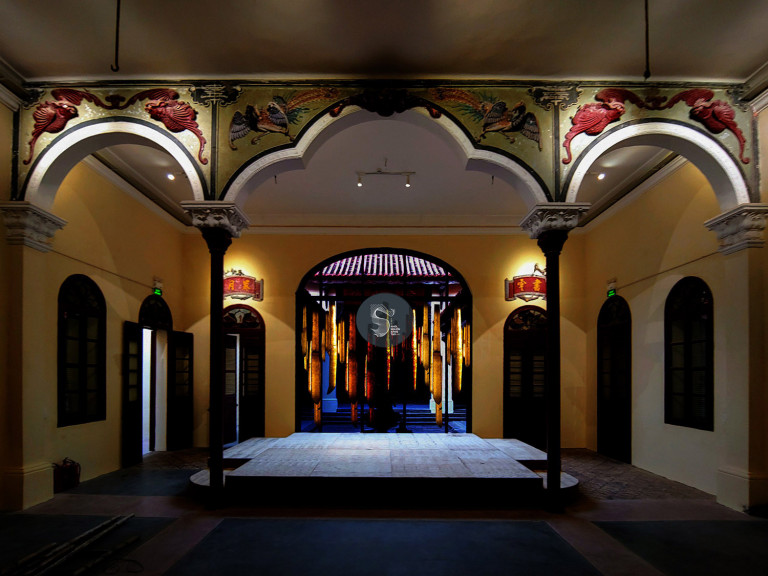
Image of the Cultural and Arts Center at 22 Hang Buom Street.
2022: Transitioning from Pilot Activities to an Urban Festival Model
The Hanoi Creative Design Festival 2022 broke free from the confines of a single building, dispersing across multiple locations within the inner city. The event featured a longer duration and a more diverse range of activities, mobilizing a broader force of artists, universities, cultural organizations, and creative enterprises. This represented a crucial transition, marking the festival’s entry into a phase of aggregating creative resources from various cultural institutions, academic bodies, and independent artist collectives.
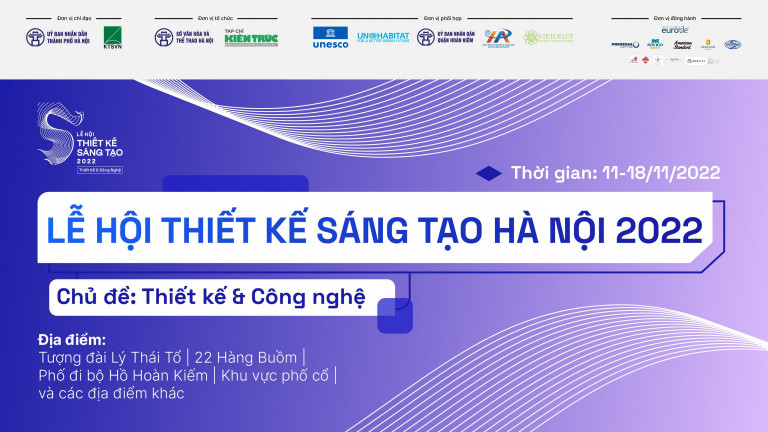
The highlight of 2022 was the professionalization of its organization. Activities were threaded together by themes, creating linkages between design, architecture, art, and urbanism. The public began to see the emergence of an interdisciplinary festival that did not merely display artworks but also raised critical issues regarding creative spaces, heritage preservation, and urban development. This season recorded a stronger spirit of innovation and cultural integration—opening new opportunities for diverse spaces and participants, while paving the way for the larger-scale activities that would follow.
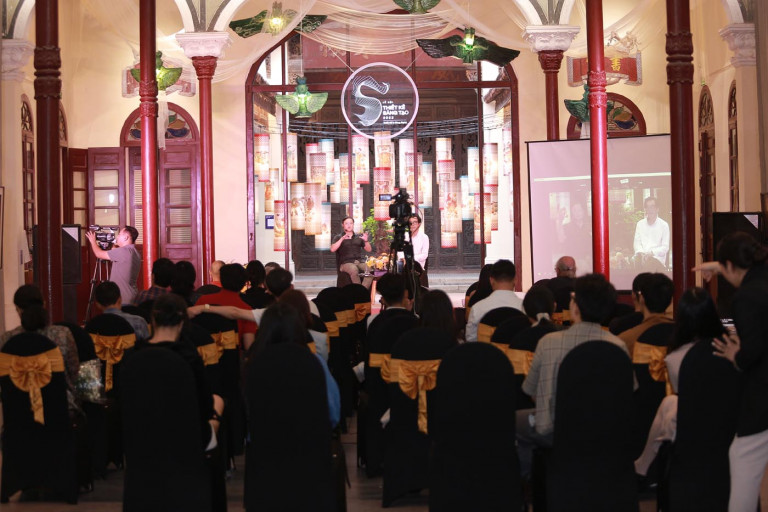
2023: Transforming Industrial Spaces and Former Factories
2023 was considered a defining turning point for the festival. While 2021 and 2022 focused on experimentation and expansion, 2023 saw Hanoi truly ‘commit’ with a bold choice: hosting the festival within former industrial zones and factories.
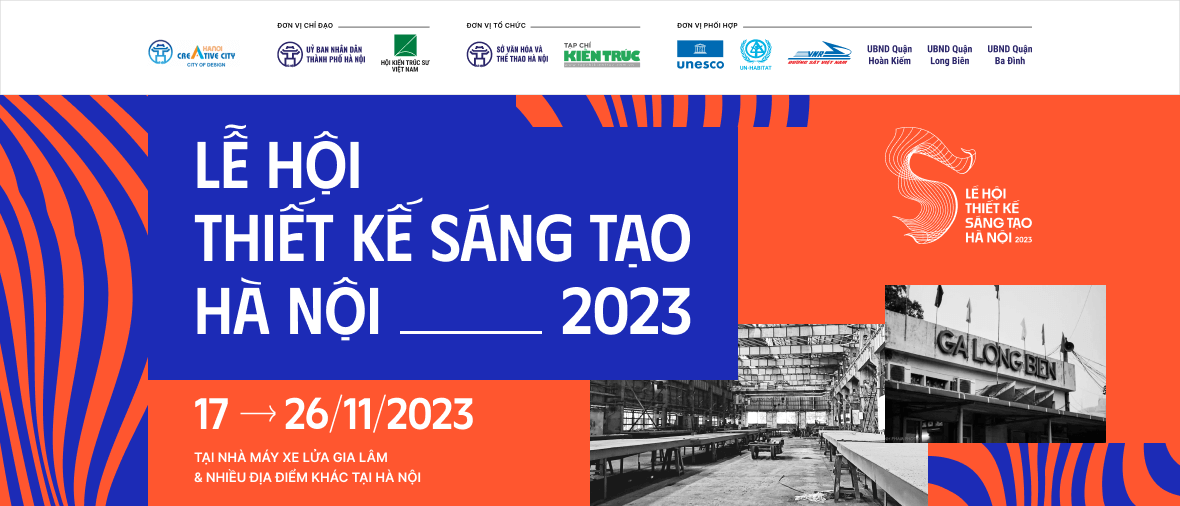
The Gia Lam Train Factory—an industrial icon of Hanoi since the French colonial era—became the centerpiece of the Hanoi Creative Design Festival 2023. Its raw workshop spaces, vintage carriages, and weathered steel-and-concrete structures were transformed into stages for a series of installation exhibitions, design showcases, fashion shows, art performances, and community events. In just over two weeks, the festival attracted over 200,000 visitors, a record-breaking figure that demonstrated the immense appeal of ‘reclaiming industrial heritage’ by repurposing factories into large-scale creative experience hubs.
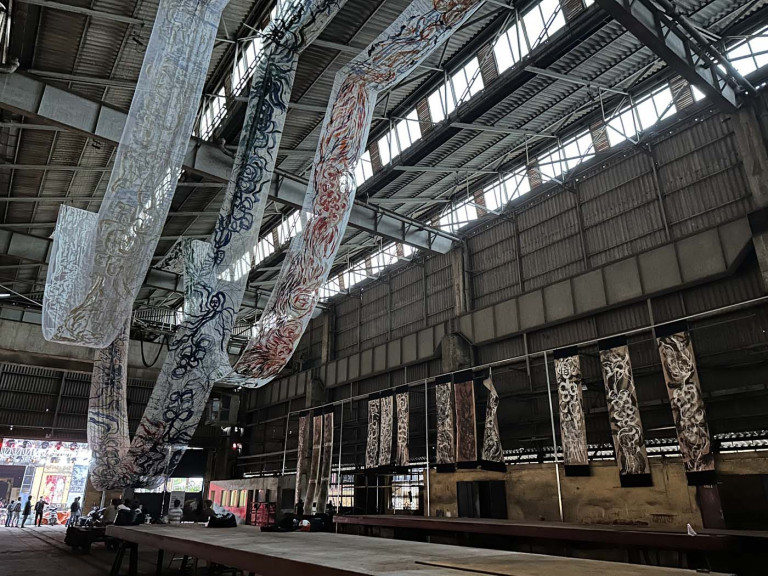
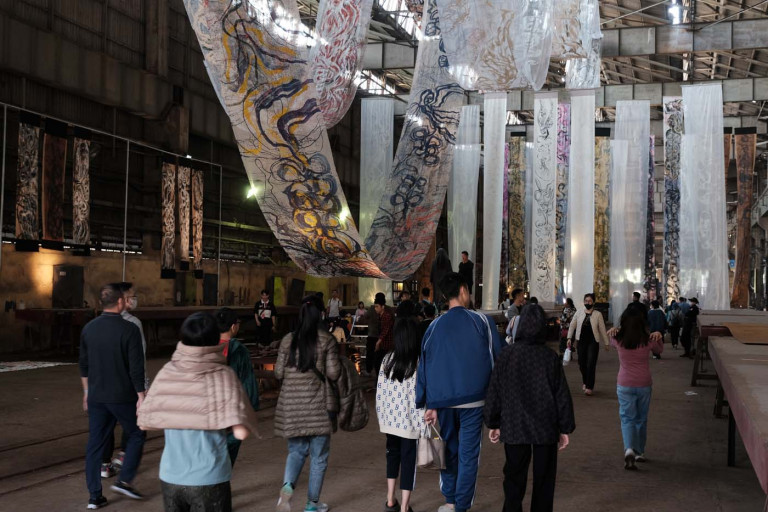
In tandem with the Gia Lam Factory, the Hang Dau Water Tower—a landmark over 120 years old—also opened its doors to the public for the first time. Thousands of young people queued daily to enter the unique cylindrical space, where light and sound installations were integrated into the architectural structure, turning the tower into a rare work of art in the heart of the city.
Beyond these two ‘heritage highlights,’ 2023 expanded its network with over 60 resonance programs citywide, attracting creative communities, universities, businesses, and hundreds of participating artists. The festival found its unique direction: using art and design to revitalize spaces that had long been ‘dormant,’ breathing new life into old industrial architecture. This approach, successful in many creative cities worldwide, created new value and vitality for Hanoi, setting the stage for future festivals to push further in vision, scale, and influence.
2024: The Creative Intersection – Radiating Festive Spirit and Creative Energy
The Hanoi Creative Design Festival 2024 represented the most significant leap in its four-year journey. Under the theme ‘Creative Intersection,’ the festival unfolded on an unprecedented scale: over 110 activities, nearly 300,000 participants, and the involvement of over 500 organizations and 1,000 domestic and international creators.
The most prominent feature of 2024 was the festival’s expansion into vast public spaces. Two major axes of Hanoi—the North-South axis (from Ly Thai To to Le Thanh Tong) and the East-West axis (from Bac Co to Trang Tien)—were organized as continuous art routes. The public experienced art within their daily lives: Opera House Square, the grounds of the Hanoi Children’s Palace, the Ton That Thuyet Guest House (Bac Bo Phu), and the former Hanoi University campus all became interactive creative hubs. By weaving these creative routes together, organizers aimed to establish a future ‘Creative Economic Axis’ for the city. The Trang Tien axis, with its prime location and advantages in commerce and tourism, is particularly well-suited to become a creative-economic focal point.
The more than 110 activities and events organized within the Festival framework underscored a powerful spirit of creative resonance. These featured a diverse array of programs, including community parades, iconic pavilions, creative installations, exhibitions, art performances, experiential activities, and both domestic and international seminars. Among these, several highlights left a profound impression on the public through their originality and ingenuity. Notably, three iconic pavilions—’The Childhood Corridor’ at the Hanoi Children’s Palace, ‘Flow’ at Dien Hong Flower Garden and the State Guest House (Bac Bo Phu), and ‘Cloudy Dragon-Snake’ at the National Museum of History—were strategically integrated into heritage sites, fostering a meaningful dialogue with the monuments themselves.
This edition also marked the first time the Organizing Committee collaborated with travel agencies to develop integrated cultural and creative tours. These journeys were designed to bring visitors closer to the city’s heritage, offering insights into cultural, historical, and architectural values while incorporating traditional art performances and festival activities. Beyond the pilot creative tours, another innovative model was introduced: the option to hire ‘trip assistants’ to co-design personalized itineraries. Furthermore, creative experts stepped in to lead specialized ‘curated tours,’ ‘architectural tours,’ and ‘artist-led tours’ to maximize information accessibility and depth for the audience.
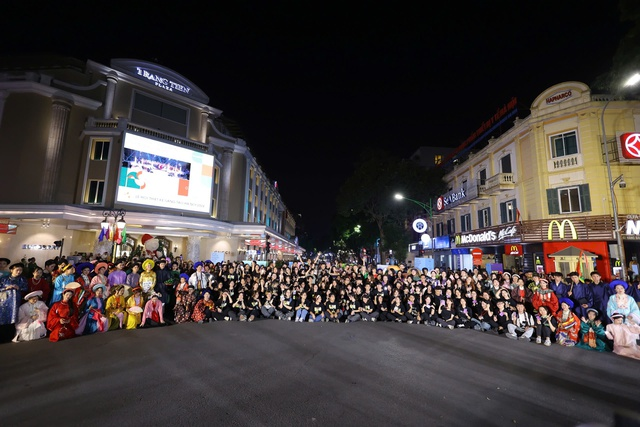
The festival attracted more than 500 organizations, creators, and architects. Photo: VGP/Thuy Linh
Under the theme ‘Creative Intersection,’ the Festival clearly illustrated the junction between two vital pillars: Elite Heritage and the Creative Economy. Through this approach, the Festival has truly embraced its role as a catalyst for the creative economy by supporting enterprises, startups, and young design collectives, while simultaneously unlocking new collaborative opportunities across the design, business, and tourism sectors.
Towards the Hanoi Creative Design Festival 2026: Building a Sustainable Creative Ecosystem
In anticipation of the 2025–2026 Creative Design Festival, Hanoi has commenced preparations for a new strategy with an expanded, long-term vision. On November 11, 2025, the City People’s Committee Office issued Notice No. 724/TB-VP, concluding the directives of Vice Chairwoman Vu Thu Hà regarding the festival’s organizational plans and the framework for 2026 events.
To ensure professional quality and depth, the city has decided to adjust the event’s frequency. According to the 2025–2030 strategic plan, the Hanoi Creative Design Festival will transition to a biennial cycle. This extension allows creative collectives, enterprises, universities, and authorities sufficient time to prepare, experiment, invest, and produce content at a more professional caliber.
Hanoi Creative Design Festival is poised to enter a new era: evolving from an annual event series into a city-wide creative platform. According to the Hanoi Department of Culture and Sports, the core spirit of the 2025–2026 period is not merely ‘organizing a festival’ but building a sustainable urban cultural-creative ecosystem. This requires a distinct shift: from concentrating resources on a single festival season to maintaining permanent creative spaces, developing creative infrastructure, and expanding collaboration models between businesses, communities, artists, and international organizations.
In 2026, the program is expected to encompass all 12 cultural industry sectors—ranging from architecture, design, and fine arts to traditional crafts, creative technology, media, publishing, and creative tourism. Beyond heritage landmarks, the festival will permeate new creative hubs, cultural industry centers, repurposed industrial zones, and creative enterprise networks. A multi-layered Hanoi, both ancient and modern, will be activated simultaneously.
To provide a structured orientation for this expansion, the city has established a primary festival route for 2026, with Dong Xuan Market serving as the focal point. From here, activities will connect through a spatial axis including Hang Dau Water Tower, O Quan Chuong Gate, traditional trade streets, the Red River middle island, and industrial spaces earmarked for regeneration. This connection creates a unique cross-spatial experience: moving from Hanoi’s oldest commercial areas through heritage gates to warehouses, factories, and new creative centers—forming a continuous chain that expresses the ‘Creative City’ identity through a vibrant urban landscape.
Parallel to this spatial orientation, Hanoi is expanding international cooperation to elevate professional standards. Associations of architects, artists, curators, and creative organizations from various countries are invited to engage deeply in the program design—from curatorial concepts and content production to performances and international dialogues. The goal is to establish the festival as a regional creative forum, capable of connecting Hanoi with the global network of creative cities.
Another key element is the mobilization of resources and the establishment of creative support mechanisms. The city is researching coordination models between the government, businesses, creative spaces, startup funds, and the creative community. Tools such as public-private partnerships, preferential policies for creative spaces, design startup funds, and digital platforms to connect creative activities are under discussion, aiming for an ecosystem capable of long-term sustainable operation, independent of total reliance on the state budget.
If the 2021–2024 period represented four years of experimentation and status affirmation, 2026 will be the turning point that places Hanoi among the elite group of creative cities with a well-organized, sustainable, and influential ecosystem on both a regional and global scale.