
Hanoi Through the Cinematic Lens: From Collective Memory to Personal Experience
From black-and-white footage capturing Hoan Kiem Lake, the Old Quarter, and rows of mahogany trees to contemporary frames of narrow alleys, old apartment blocks, and expanding new urban areas—Hanoi remains one of the few cities continuously tracked by Vietnamese cinema for over seven decades. The most profound shift lies not only in the urban landscape but also in how cinema chooses its perspective. Hanoi was once narrated as a space of shared community memory, gradually evolving to be viewed through specific experiences intertwined with the lives and emotions of the individuals inhabiting the city.
Hanoi in Black-and-White Films: Fragments of Collective Memory
In films produced before the 1980s, Hanoi often appeared as a unified symbolic space. Familiar images such as Hoan Kiem Lake, the Old Quarter, weathered tiled roofs, bicycles, and almond or mahogany trees appeared repeatedly, creating a collective imagery of the central urban hub of the North during the war and post-war periods. At that time, the city was not described as a place of diverse life paths, but as an entity representing history, the community, and the spirit of the era.
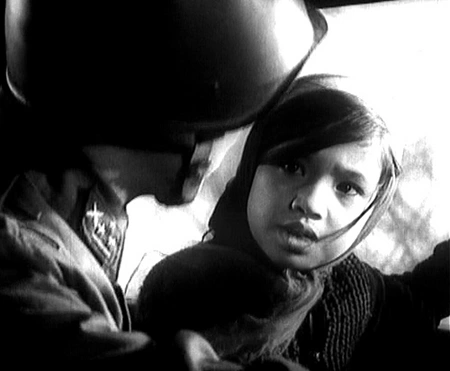
This perspective is clearly demonstrated in “Little Girl of Hanoi” (1974). The film utilizes many wide-angle shots, a slow rhythm, and maintains a relative distance between the camera and the characters. Hanoi appears as a shared backdrop where the personal story of the girl, Ngoc Ha, unfolds within a larger historical context. The city is not fragmented by living spaces or social classes but is presented as a communal space of wartime memory and social cohesion.
A scene from the film “Little Girl of Hanoi.” Photo: Dan Tri News
In “August Star” (1976), Hanoi continues to be cast in the role of a historical epicenter. The city emerges through its squares, streets, and crowds, carrying the rhythmic pulse of a revolutionary moment. Although the film features multiple character arcs, the emphasis remains on the sensation of Hanoi as a singular entity moving in tandem with history, where individuals merge into the collective flow.
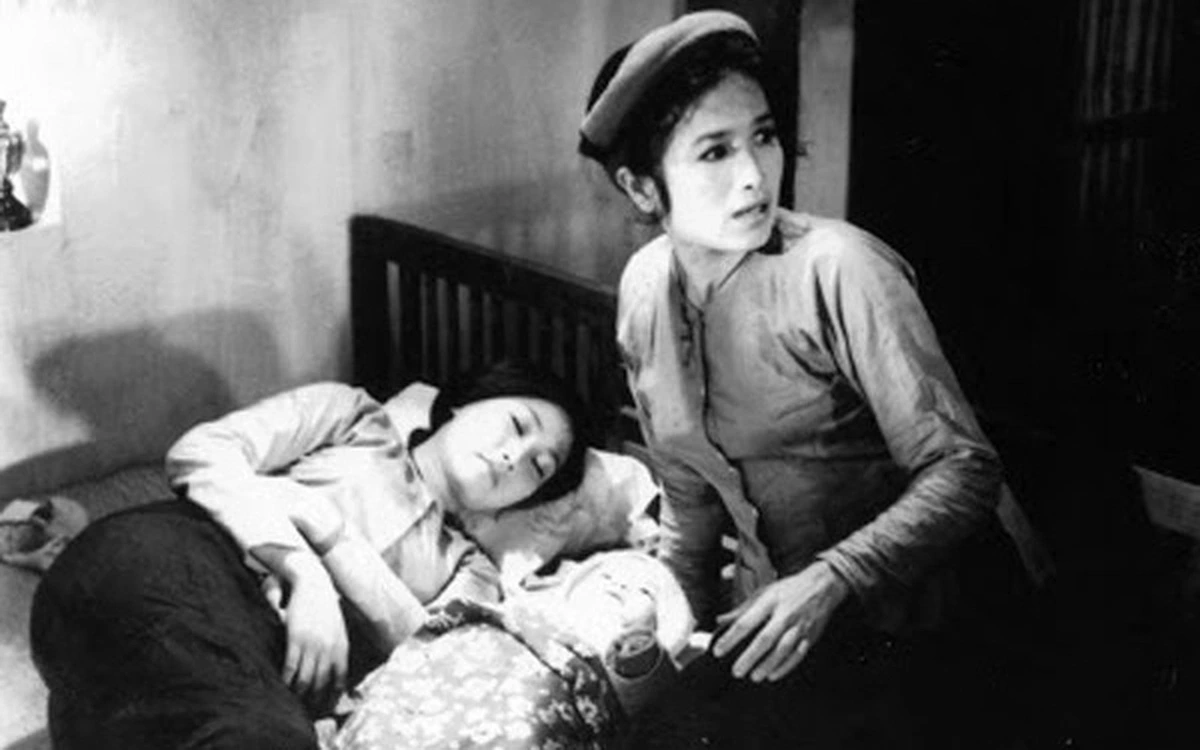
A scene from the film “August Star.” Photo: VOV
By the early 1980s, “Hanoi: The Season Birds Build Their Nests” signaled a more subtle shift. While Hanoi was still captured with a slow tempo and relatively stable compositions, the focus began to lean toward daily life and the psychological transformations of the city’s inhabitants. Nevertheless, Hanoi in this film retained a high level of representational quality, not yet truly becoming a space for differentiated personal experiences.
The film “Hanoi: The Season Birds Build Their Nests”
In terms of visual language, many films of this period prioritized static compositions, minimal camera movement, and wide-angle frames. Consequently, Hanoi appeared stable, orderly, and somewhat tranquil. The city was positioned as a central symbol, where value resided in its representational nature and the permanence of its imagery rather than in the minor urban fluctuations of daily life.
Hanoi in Contemporary Cinema: The City Viewed through Individual “Slices”
In contemporary Vietnamese cinema, Hanoi no longer primarily appears as a unified image. The city is viewed through specific spatial experiences, intertwined with the personal rhythms and mental states of the characters. Hanoi no longer stands as a representation of a collective memory but is perceived as a direct living environment—where people exist, navigate, and contemplate within very specific urban conditions.
In “The Guava House” (2000), Hanoi is narrated from the perspective of family memory. Narrow alleys, gardens, old objects, and a slow pace of life create an intimate, private city. Hanoi in the film is not identified by grand symbols but emerges through the sensation of being “at home,” where personal memory is tightly bound to the living space. Consequently, the city becomes a part of the character’s interior life rather than just an external backdrop.
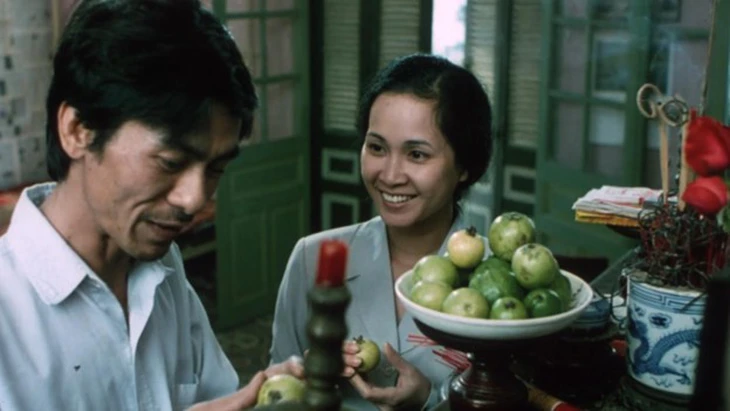
A scene from the film “The Guava House.” Photo: VTV
With “Peach Blossom, Pho and Piano” (2024), while Hanoi returns to a historical context, the storytelling expands to encompass diverse fates and lifestyles. The city is simultaneously a site of major historical events and a space for very ordinary daily activities. Hanoi in the film remains symbolic, yet that symbolism is anchored in small details of life, making the city appear as a collection of specific experiences rather than a generalized image.
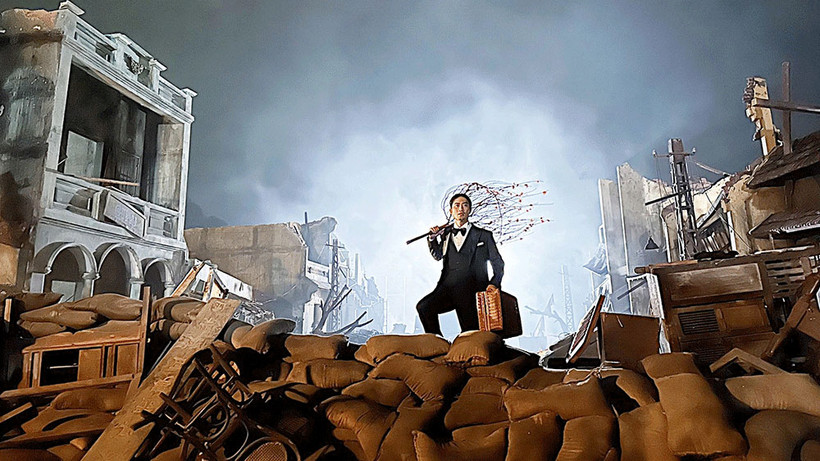
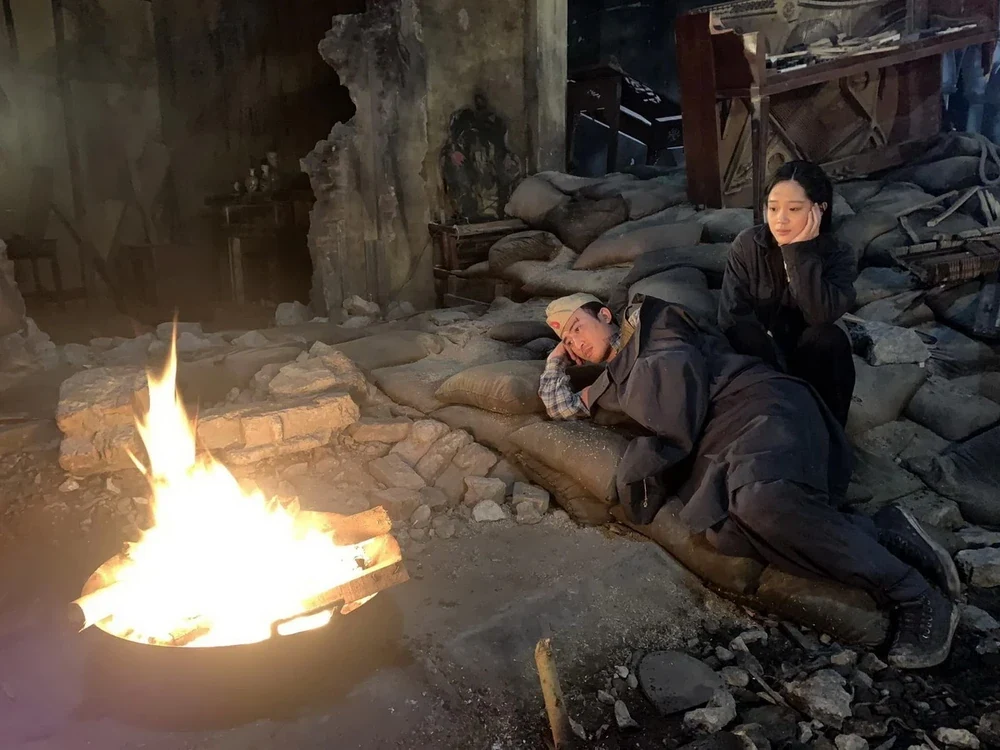
A scene from the film “Peach Blossom, Pho and Piano.” Photo: Film Crew
In “Cu Li Never Cries” (2024), Hanoi is perceived as a living space with temporal depth. The film does not rely on easily recognizable icons but focuses on confined spaces, houses, construction sites, and quiet daily routines. Hanoi emerges as a silent character, carrying memories, congestion, and the communication gaps between generations. The city is not viewed from a distance but is lived alongside the characters in each lingering frame.
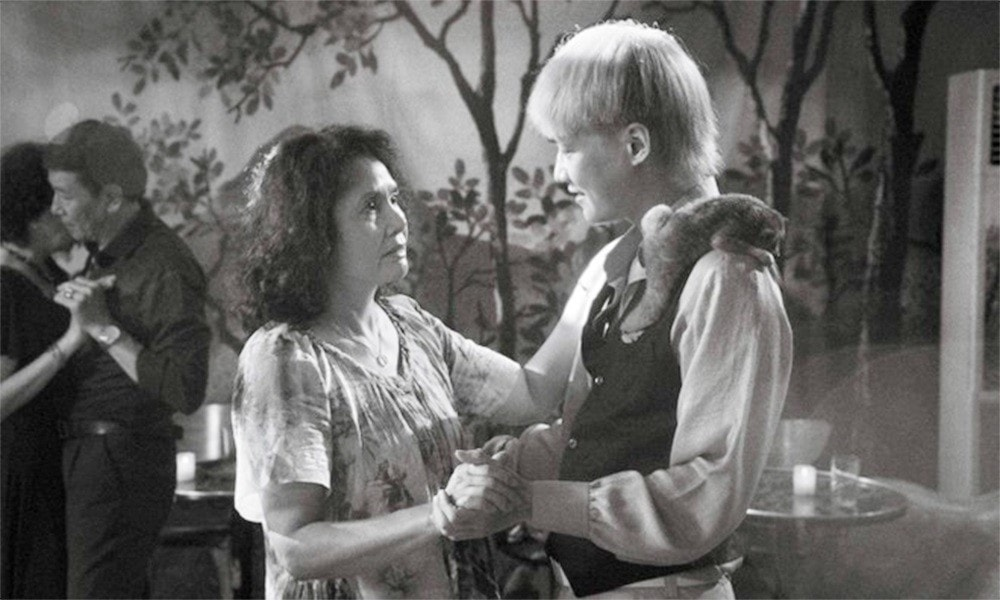
A scene from the film “Cu Li Never Cries.” Photo: Organizers
Most recently, “The Miracle Generation” (2025) showcases a Hanoi with an accelerating urban pulse. The film opens with familiar landmarks like Hoan Kiem Lake or the Opera House, then quickly narrows down to the daily life of the Old Quarter, small alleys, sidewalks, and family living spaces. Through the coming-of-age journey of young characters, Hanoi appears both familiar and pressurized, reflecting generational clashes and contemporary urban issues.
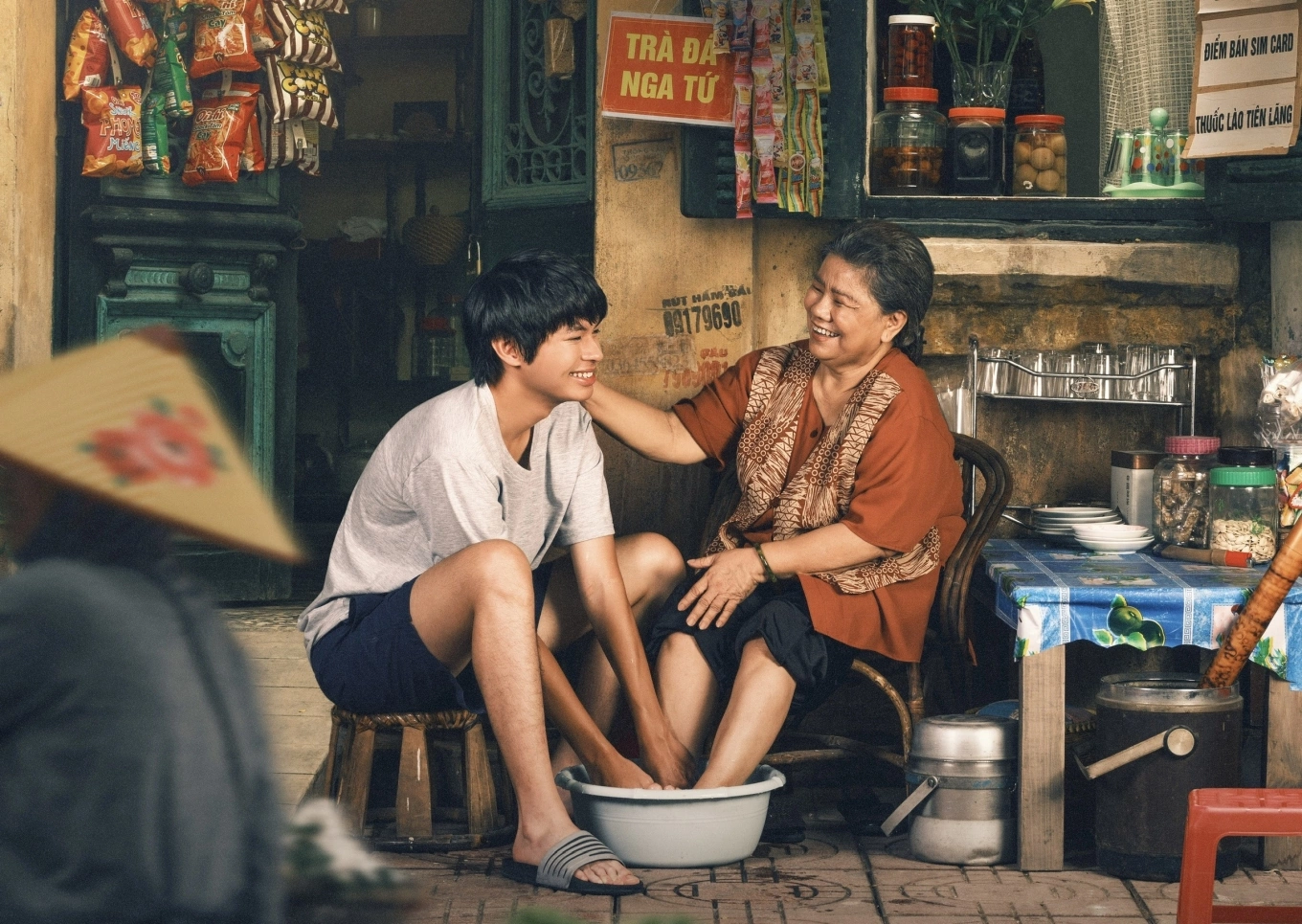
The film “The Miracle Generation.” Photo: Film Crew
Looking at these works, Hanoi in modern cinema is no longer defined by the presence or absence of familiar symbols, but by the way the city is “experienced.” Cinema moves from intimate viewpoints—such as the home, the alley, or the neighborhood—to reveal Hanoi as a concrete living environment where personal stories unfold and take shape.
Chào bạn, là một công cụ dịch thuật chuyên nghiệp với văn phong báo chí và phê bình nghệ thuật chuyên sâu, tôi xin chuyển ngữ phần kết thúc của bài luận về Hà Nội qua điện ảnh sang tiếng Anh.
When Hanoi is More Than Just a Backdrop
The distinction between different cinematic eras lies not only in how Hanoi’s imagery has changed but also in the role of the city within the narrative structure. In many black-and-white films, Hanoi often served as a backdrop for collective memory, selected and arranged toward symbolic idealization. Individuals appeared within that space as integral parts of the community and the general order.
In later films, particularly from the renovation period to the present, Hanoi has gradually emerged as a space with its own inherent weight. The city is no longer just “there”; it directly impacts the rhythms of life, emotions, and choices of the characters. The contrasts between old neighborhoods and new spaces, between the slow pace of life and urban speed, and between family memories and the pressures of livelihood have begun to be expressed more clearly. Consequently, Hanoi in cinema carries many nuances—it can be intimate yet stifling, familiar yet constantly evolving.
This shift is also observable at the level of visual documentation. Activities such as the exhibition “Filming Locations as Relics and Cultural Heritages of Hanoi,” organized by the Vietnam Film Institute, demonstrate that Hanoi has been continuously recorded over decades, from documentaries to feature films. What matters is not just the number of recurring symbols, but how layers of space—from historical relics to daily life—have increasingly become storytelling material. Hanoi is not merely preserved as an image but is redefined through cinematic lenses and the way people inhabit the city.
Through cinema, two coexisting perspectives of Hanoi can be observed: A Hanoi of collective memory, symbolic and unified, preserved in black-and-white classics like “Little Girl of Hanoi” or “August Star”; and a contemporary Hanoi, emerging through specific personal experiences in later works, where the city is felt from within the fabric of life. This evolution not only reflects the city’s transformation process but also illustrates how people have changed in the way they live, remember, and narrate their own urban space.
Source:
- https://tuoitrethudo.vn/hanh-trinh-tai-hien-ky-uc-do-thi-ha-noi-qua-tung-thuoc-phim-265483.html
- https://daibieunhandan.vn/sang-tao-hinh-anh-ha-noi-trong-dien-anh-tu-ky-uc-den-hien-tai-10350380.html
- https://cand.com.vn/van-hoa/Phim-Em-be-Ha-Noi-hay-tieng-noi-thuc-tinh-luong-tri-i217873
- https://cand.com.vn/Chuyen-dong-van-hoa/ha-noi-trong-mat-ai-va-chuyen-tu-te-len-song-truyen-hinh-quoc-hoi-viet-nam-i670320/
- https://hanoionline.vn/canh-va-nguoi-ha-noi-trong-tung-thuoc-phim-271629.htm
- https://daibieunhandan.vn/sang-tao-hinh-anh-ha-noi-trong-dien-anh-tu-ky-uc-den-hien-tai-10350380.html
- https://tuoitrethudo.vn/hanh-trinh-tai-hien-ky-uc-do-thi-ha-noi-qua-tung-thuoc-phim-265483.html
- https://vhds.baothanhhoa.vn/ha-noi-nguon-cam-hung-bat-tan-cua-dien-anh-nuoc-nha-33391.htm
- https://vtv.vn/van-hoa-giai-tri/ha-noi-nguon-cam-hung-bat-tan-cho-dien-anh-20240904121907864.htm
- https://nguoihanoi.vn/ban-hung-ca-ve-nguoi-ha-noi-tren-man-anh-87299.html
- https://vovworld.vn/vi-VN/tap-chi-van-nghe/nhung-cau-chuyen-ha-noi-tu-dien-anh-1343835.vov
- https://vnexpress.net/ve-dep-ha-noi-trong-phim-the-he-ky-tich-4993218.html
- https://nguoihanoi.vn/hoi-dien-anh-ha-noi-3-thap-ky-sang-tao-va-cong-hien-94986.html
- https://vov.vn/van-hoa/sao-thang-tam-ban-hung-ca-dien-anh-ve-mua-thu-lich-su-post1219514.vov
- https://dantri.com.vn/van-hoa/chuyen-phim-da-van-vao-cuoc-doi-em-be-ha-noi-1356237217.htm