“Portraits of Hanoi” Featured in the British Council’s Creative Vision Publication
Hanoi is entering a robust phase of development in its creative industries. The city boasts numerous artistic practices nurtured over time, grown through the persistence of those pursuing cultural values and long-term thinking.
Selected by the British Council, the individuals and organizations featured in the Creative Vision publication represent diverse “cross-sections”: experimental art, original music composition, indigenous architecture, sustainable fashion, photography, independent cinema, puppet theater, urban design, and cultural research… They operate amid numerous challenges in infrastructure, finance, and policy, yet continue to expand their influence through flexibility, creativity, and a spirit of dialogue. It is they who spark important discussions on heritage, community, environment, and the city’s future. Through their activities, Hanoi is gradually forming a connected, knowledgeable, creative ecosystem capable of inspiring future generations. This is a long-term journey, reflecting the powerful shift in cultural energy within Hanoi.
Á Space and Curator Vân Đỗ
Tucked away in a corner of Long Biên district, Á Space is a non-profit venue for experimental art founded in 2018 by Tuấn Mami of Nhà Sàn Collective. In 2022, Vân Đỗ, a young curator with a particular passion for the intersection of art and society, became its Artistic Director.
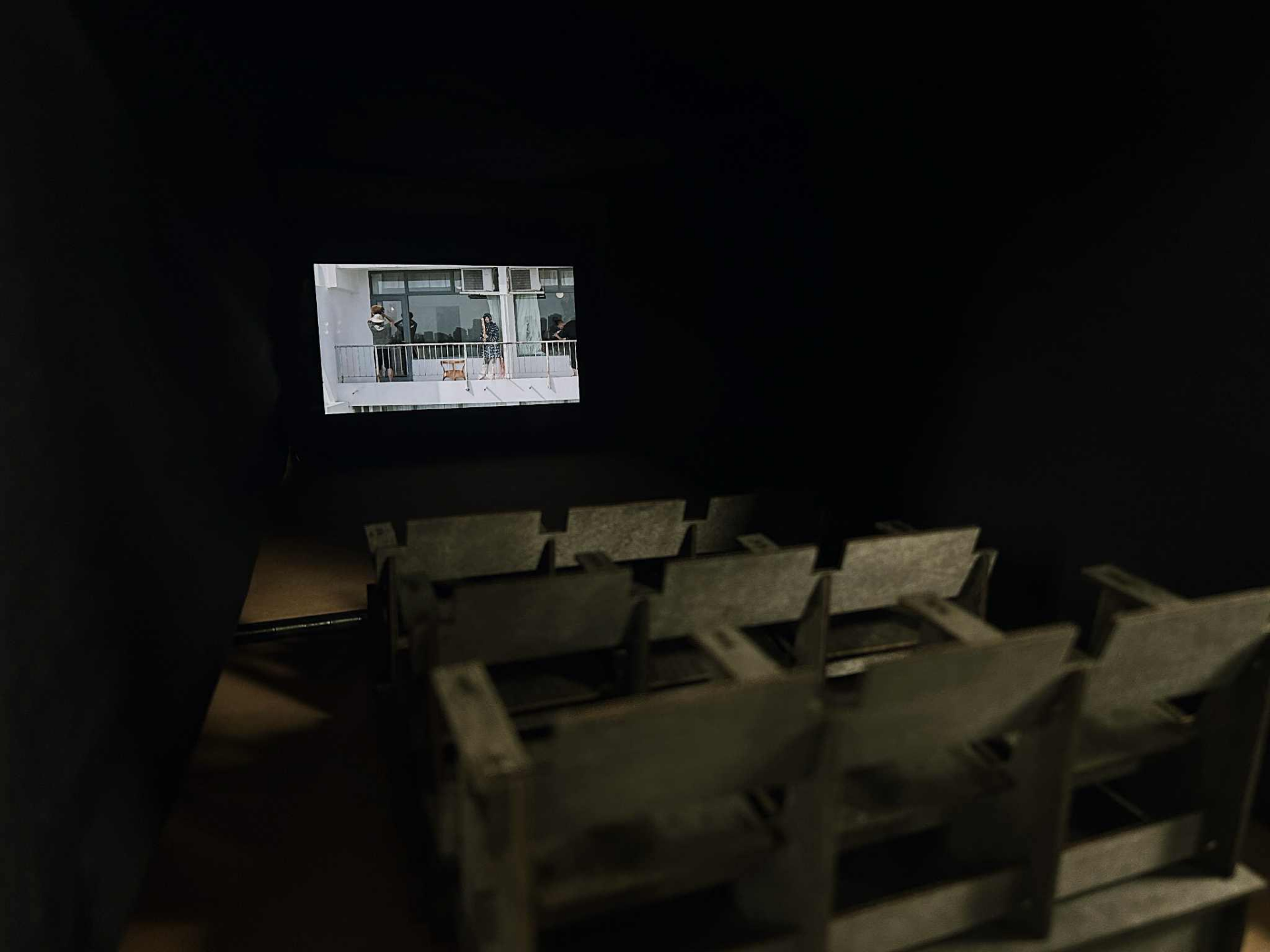
Cinema screening room at Á Space (Photo: Á Space)
Vân came to art through photography and documentary filmmaking classes at Hanoi DOCLAB, later taking on a curatorial role at The Factory Contemporary Arts Centre in Ho Chi Minh City. At Á Space, her work focuses on creating room for raw initial experiments in artistic practices while seeking creative ways to support emerging artists. However, not everything happens within Á’s physical space; collaborative projects extend outward, such as Vietnam’s first Curatorial Industry Symposium (2024) and the exhibition Nostalgia for the Future at Hanoi Children’s Palace—as part of the Hanoi Creative Design Festival 2024—which gained widespread recognition.
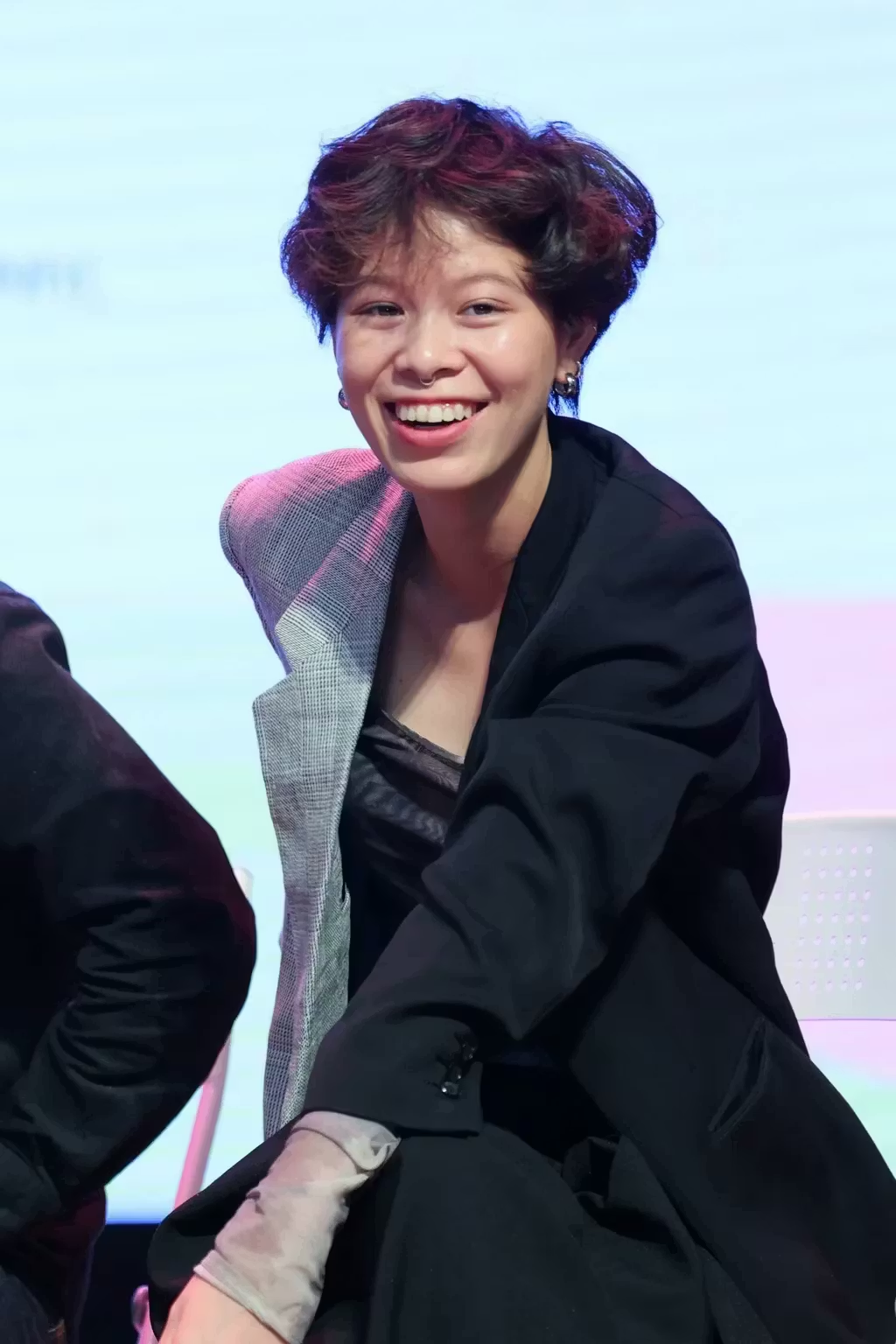
Curator Vân Đỗ (Photo: Mai Thương)
For her, many collaborative projects stem from ongoing dialogue with stakeholders, including artists, curators, researchers, architects, and government representatives. This approach helps her confront resource scarcity, the lack of vital interdisciplinary discourse, and the absence of long-term planning for culture at the micro level. She remains optimistic about the future, noting increasing public-private collaborations in the region and growing potential for art to become more comprehensive, fostering genuine and lasting resonance for the dedicated efforts of the art community.
Hanoi Rock City
Established in 2010, Hanoi Rock City (HRC) is a live music venue that, over time, has become—with tireless support for the music community—an indispensable cultural landmark in Hanoi. Surviving and thriving for fourteen years in the same location, through challenges from the COVID-19 era to urban and socio-cultural shifts, is an unprecedented achievement for an independent venue dedicated to local talents.
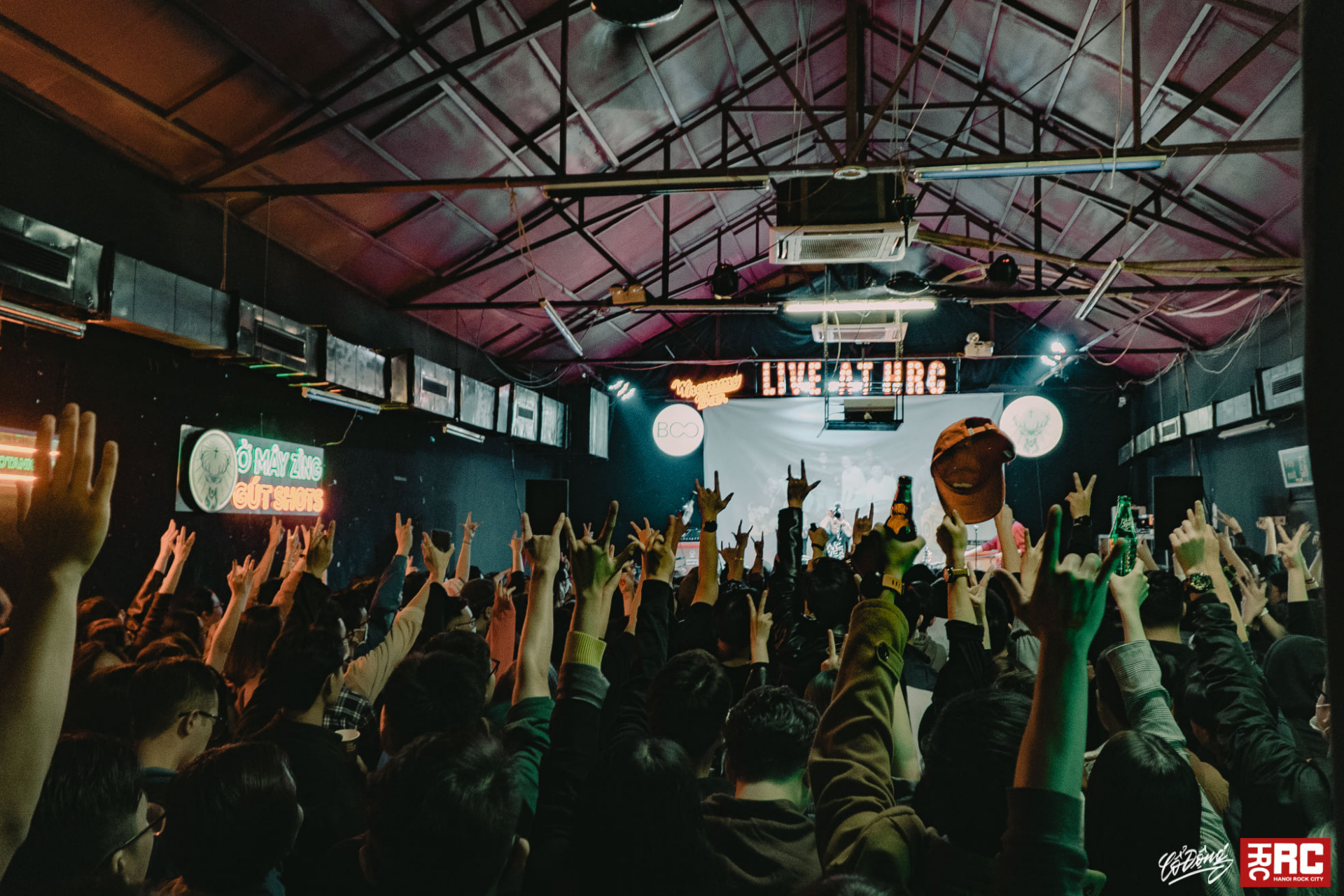
Hanoi Rock City space (Photo: Hanoi Rock City Website)
Võ Đức Anh, affectionately known as DA, one of HRC’s founders, highlights four interwoven elements that allow a project to “bloom” in Hanoi: a passionate team, talented and free-spirited artists, a supportive community, and at least one “crazy” person willing to devote all time and energy without overcalculating profits. In this case, that person is DA, a math teacher with numerous tattoos, who—after completing studies and returning from Nottingham—co-created this space, bringing Hanoi’s first vibrant live music venue to the Tây Hồ area.
Most Vietnamese original music artists have performed on HRC’s stage, often for their debut. HRC’s recognition by artists underscores the urgent need for dedicated spaces for independent creators. Hanoi lacks venues regularly hosting original works, highlighting the need to nurture the entire music ecosystem—from artists needing performance opportunities and audiences craving immersion, to industry professionals aiming to elevate experiences worthy of the artists. Understanding this, HRC steadfastly upholds community and creative core values, offering hope for a more diverse and robust Hanoi music scene.
Kecho Collective
Hanoi’s built environment has long captivated architects, partly due to its blend of colonial, modern, and socialist styles. The city’s rapid growth often creates interweavings of traditional and contemporary structures, enriching urban spatial and historical experiences. Hanoi’s architectural evolution is tied to its political and economic narrative, through ups and downs from occupations and wars to today’s economic rise. For architects like Nguyễn Mạnh Tuấn, founder of Kecho Collective, this context offers starting points: disconnection from traditional materials and techniques, vernacular qualities, interdisciplinary connections, and Hanoi’s unique space-time characteristics. His interest in bamboo drove Tuấn to reconnect with Vietnamese culture, returning to Hanoi after over a decade in France and the United States. He explored bamboo’s historical value and social importance, considering related aesthetics.
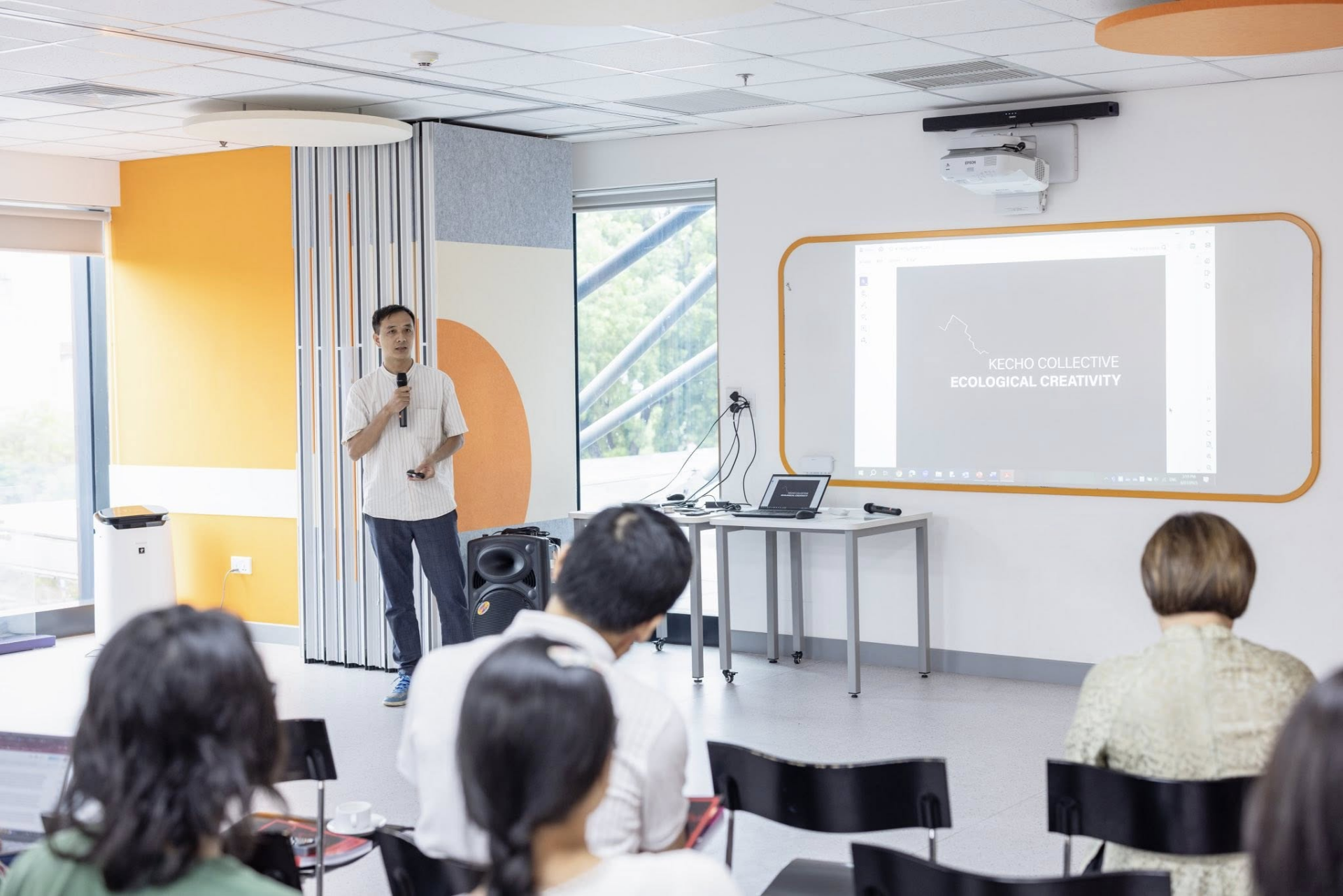
Architect Nguyễn Mạnh Tuấn introducing Kecho Collective at the launch of the “Creative Vision” publication in Hanoi (Photo: Kecho Collective)
Tuấn’s focus as designer and educator is to honor Hanoi’s distinctive features: the richness of vernacular constructions, flexibility in public space use, and—despite risks of disappearance—access to traditional building knowledge. Embracing Hanoi’s collective essence, Kecho Collective hopes to contribute to the burgeoning indigenous design movement, gathering creators and community members to explore opportunities in underused and transforming spaces.
Kilomet 109 and Designer Vũ Thảo
This is an exciting time for Vietnam’s fashion industry—as younger consumers become more informed, designers build stronger personal identities, creating room for human-centered values like cultural preservation and community. Pioneering the “slow fashion” movement domestically is Vũ Thảo, founder of Hanoi-based brand Kilomet 109. Thảo’s commitment to social and environmental sustainability shines in every detail and process, from using 100% natural materials to utmost care for rural collaborators across Vietnam.
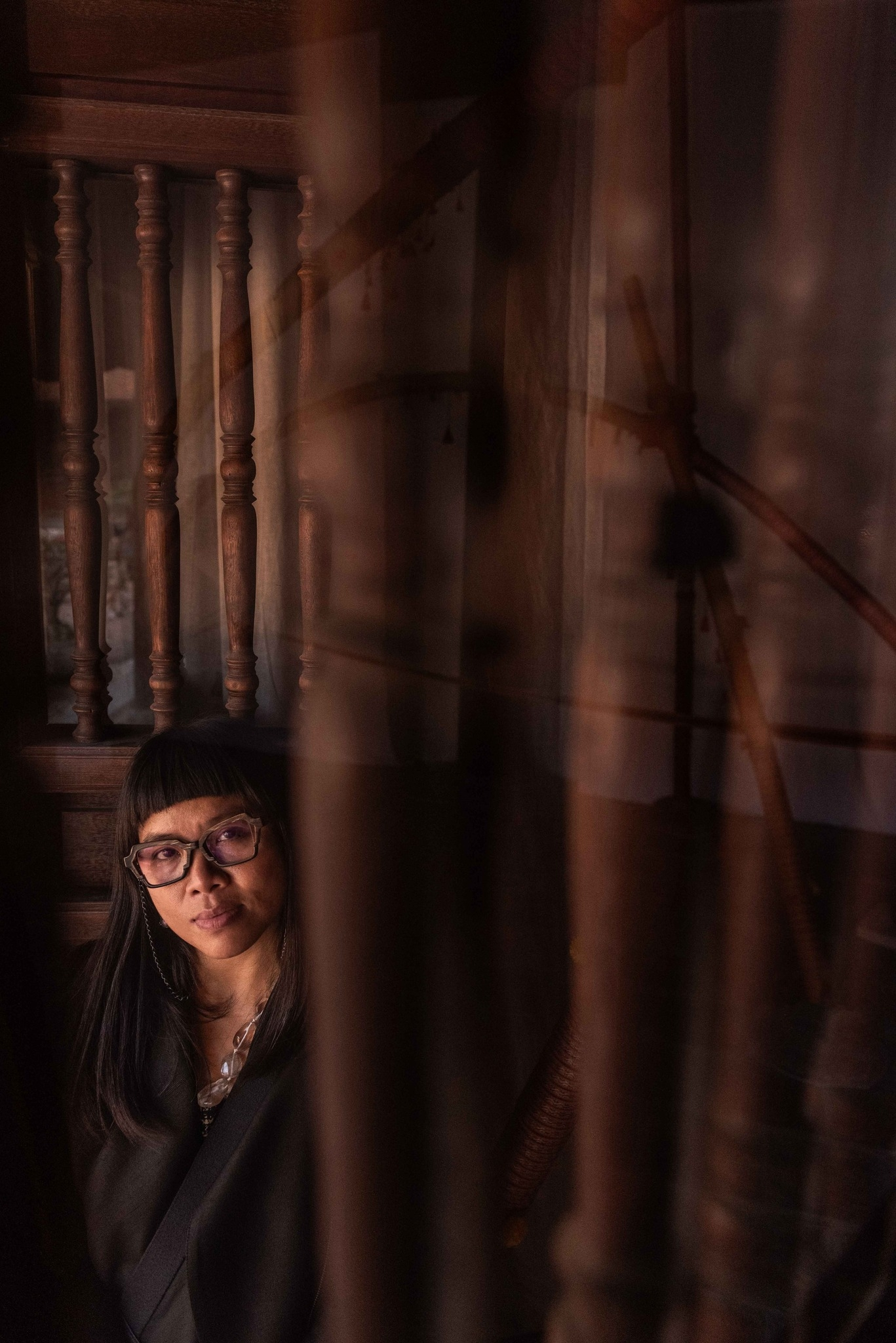
Designer Vũ Thảo (Photo: FBNV)
The domestic fashion industry is dominated by international giants. Factories causing pollution occupy vast lands, exerting heavy environmental pressure. Industrial production also draws labor from former agricultural areas, leading to the decline of traditional crafts. Though mass consumption is driven by the majority, ethically minded designers like Thảo are gaining attention. By honoring traditional techniques and materials, Kilomet 109 helps preserve local values, educating consumers and future designers on the depth of Vietnamese textile culture.
Thảo’s products attract diverse audiences: contemporary silhouettes for the highly stylish, impressive dyes for textile enthusiasts—and above all, comprehensive design storytelling that makes her creations unique. Every thread is cultivated, cared for, and transformed by Vietnam’s soil and sun, with techniques passed directly across generations. The cultural value of each garment attests to a design movement representing Vietnam’s diversity and strength.
Matca
We met Linh Phạm, co-founder and creative director of Hanoi’s photography space Matca, on a warm winter afternoon. The six-story tube house, typical of post-Đổi Mới individual residences—serves as a creative complex including a café, exhibition area, office/studio (with an impressive photography-themed library), and more. This is where the Matca team gathers to work, hosts community events, or simply welcomes friends for homemade beer.
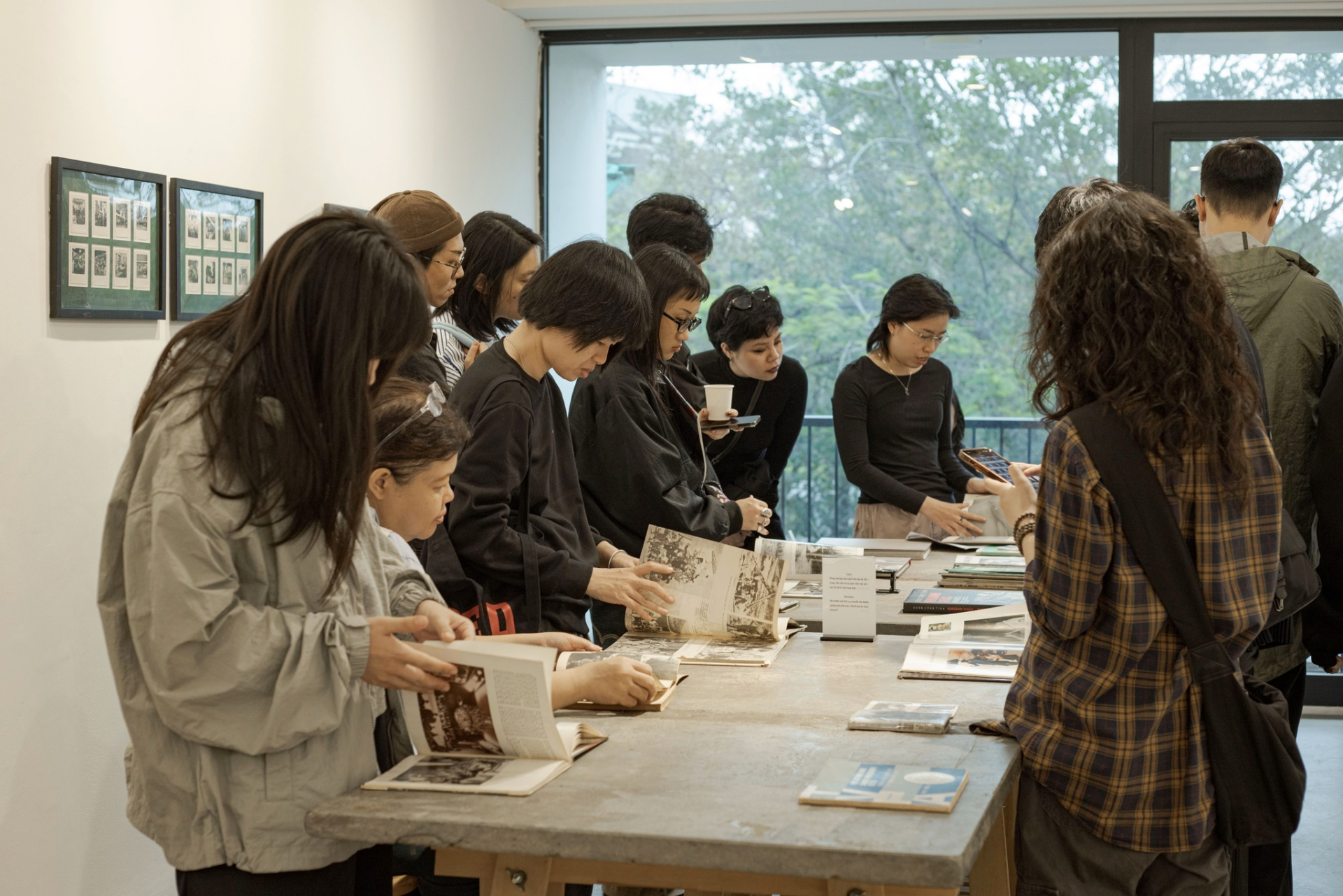
An activity at Matca photography space (Photo: Matca)
Matca is a photographers’ project centered on conversations around photography. It began as an online magazine in 2016, adding a physical space and publishing arm in 2019. Linh Phạm, a co-founder, started his professional photography career in 2012 after studying graphic design and exploring documentary photography. Hà Đào, editor and program coordinator, is also a photographer and visual artist. For them, Matca is deeply personal, though inseparable from the photography community it has built over the years. The project arose from the urgent need for systematic research, discussion, and presentation of photography in Vietnam, when access to knowledge was limited. It immediately resonated strongly with young creators nationwide and continues to do so.
When asked about operating Matca’s physical space, Linh acknowledges the difficulty due to greater responsibilities, but human interactions and a tangible community provide the drive to persist.
Nguyễn Bảo Châu
The Hanoi International Queer Film Week (HIQFW) was first held in 2017. After three consecutive seasons in 2017, 2018, and 2019, this independent film festival has done their fourth edition in early 2025.
It all began with Nguyễn Bảo Châu’s personal journey of discovery—a young filmmaker growing up in Hanoi’s Old Quarter. His grandmother, a former cinema ticket seller, instilled in him a passion for films and theaters. Additionally, he has long been active in promoting LGBTQIA+ expressions, raising awareness about gender and sexual diversity. Realizing no queer film festival existed—and upon official registration of © Hanoi International Queer Film Week in Hanoi—he believed such an event would benefit many. While acknowledging underground projects like Queer Forever! by artist Nguyễn Quốc Thành and the 2016 Vietnam Queer Film Festival, he felt queer films deserved screening in proper cinemas.
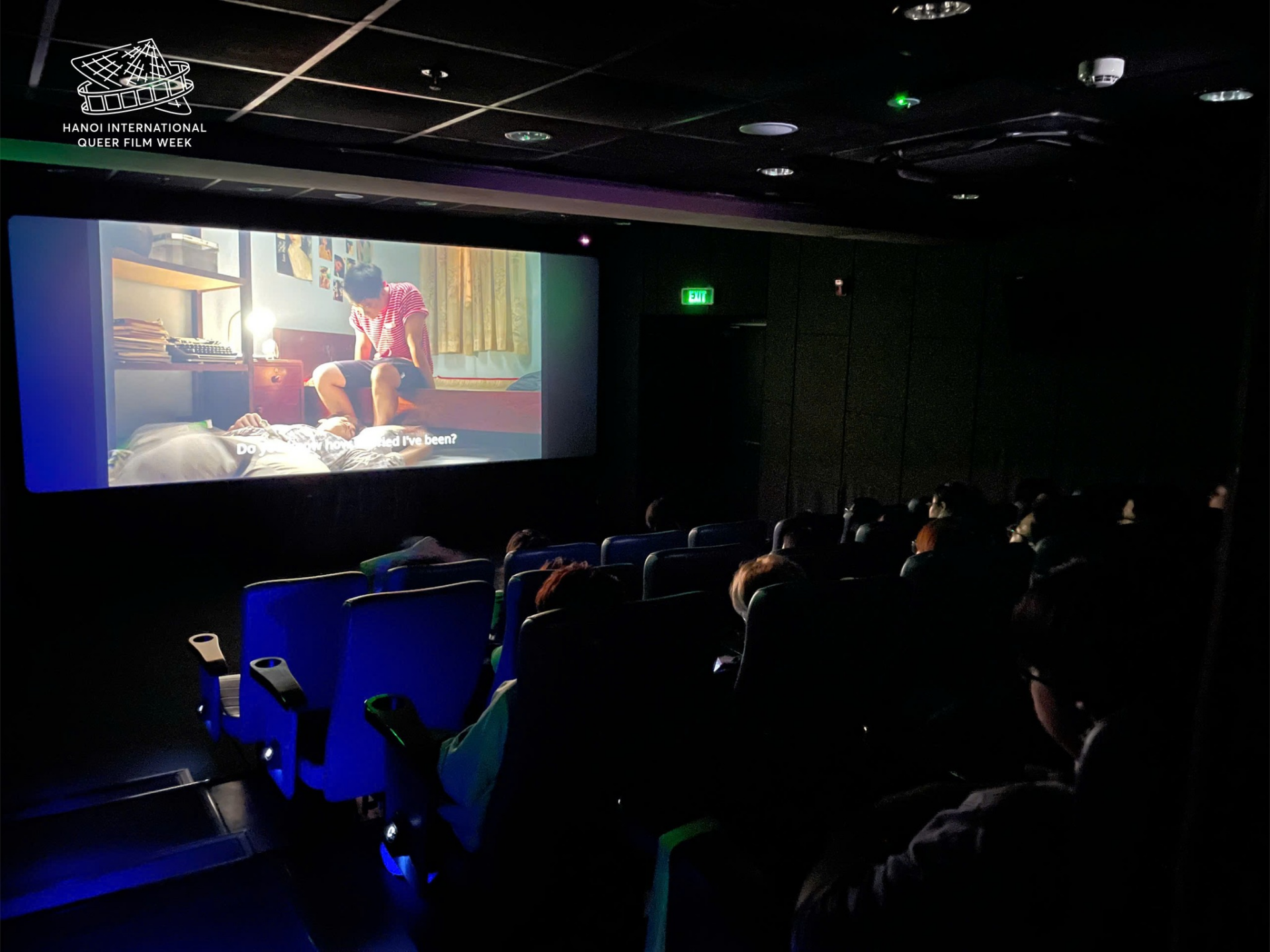
Hanoi International Queer Film Week 2025 (Photo: HIQFW)
HIQFW formed with help from foreign organizations, especially the Dutch Embassy, and screened at various central venues. Over the years, it has attracted growing audiences enjoying films exploring queer stories and lesser-known global communities. Châu and his team have diversified the lineup to include all genres—from shorts to features, independent to commercial—targeting both specialists and general viewers.
TồLô Puppet Theater
Linh Valerie and Kim Ngọc collaborated with Đó Theater in Nha Trang—the only theater in Vietnam designed specifically for puppetry—along with directors and creatives, to produce Vietnam’s first live puppet play, Rối Mơ. Now, presenting TồLô’s debut work Thổ Địa to audiences, the two artists experience both joy and the challenges of performing arts in Hanoi.
TồLô Puppet Theater emerged from the passionate artistic path of founder Linh Valerie Phạm and collaborator Trần Kim Ngọc. After university and early career in New York, Linh returned to Hanoi in 2017. With experience in over 20 experimental theater projects and observing hundreds more, she chose Hanoi to continue her solo career. In 2018, she founded Mắt Trần Ensemble—a female puppetry collective aiming to connect society, reach diverse audiences, and improve accessibility. The ensemble has performed for communities across Vietnam.
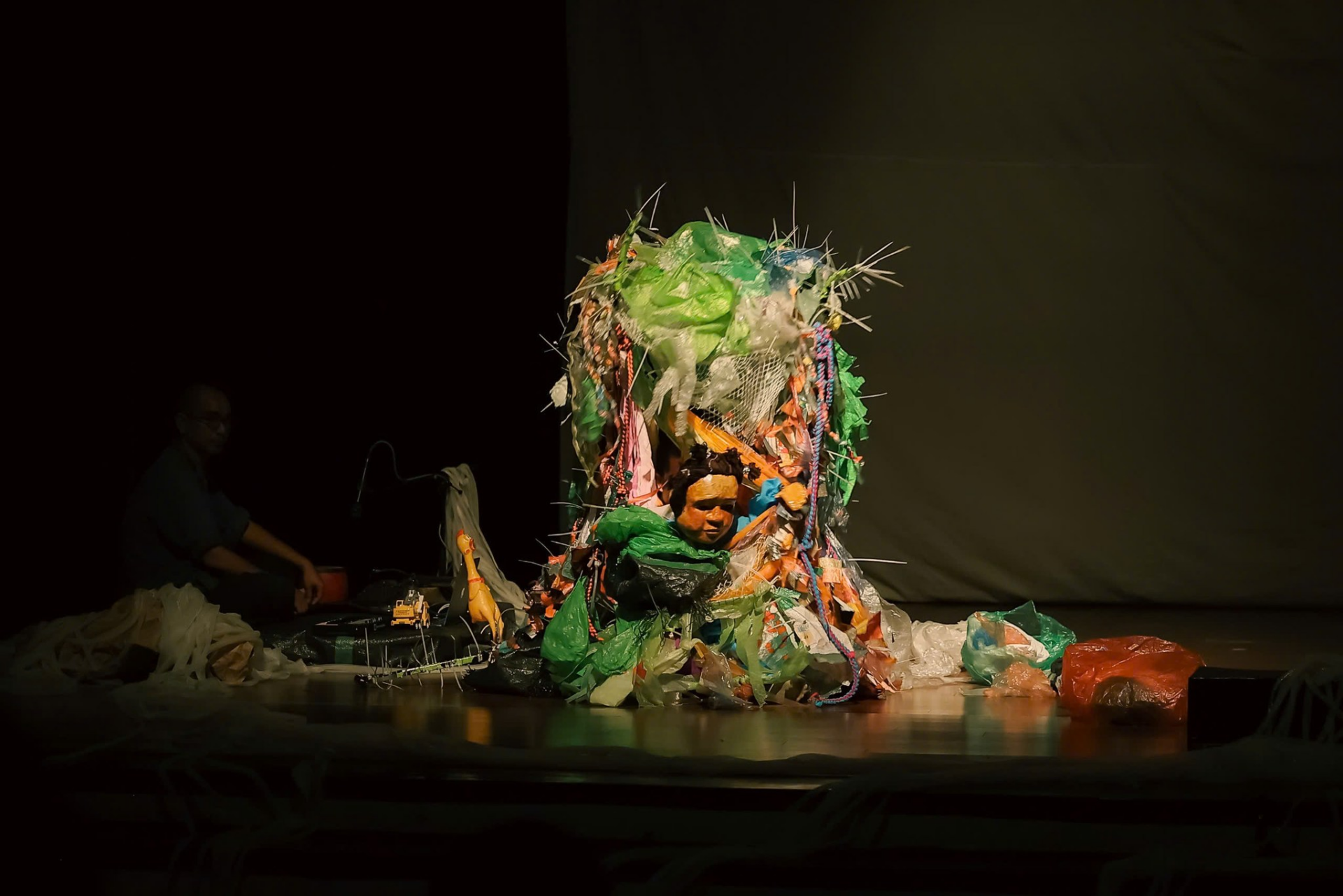
Thổ Địa performance by TồLô Puppet Theater at the Hanoi Creative Design Festival 2024 (Photo: Hanoi Creative Design Festival)
Linh believes her works create spaces for sharing and receiving confessions. Thus, she embraces diverse boundaries, including expressive ones and those in Vietnamese theater-making. She sees them as nurturing a rich artistic ecosystem. Overcoming infrastructure and resource limits, performing arts in Southeast Asia are gradually producing distinctive works. As regional interest in contemporary art grows, more skilled theater professionals will emerge.
Think Playgrounds
In a city where land for public and green spaces remains limited, Think Playgrounds (TPG) stands out as a creative, dedicated approach contributing to space creation and community bonding.
It began around 2012 when co-founder Chu Kim Đức and colleagues assisted American donor Judith Hansen in proposing a playground project along Hoàn Kiếm Lake. Though unrealized, the idea—stemming from the lack of free, open play spaces for children—inspired by “adventure playgrounds,” motivated volunteers to build smaller ones in Hanoi starting 2014.
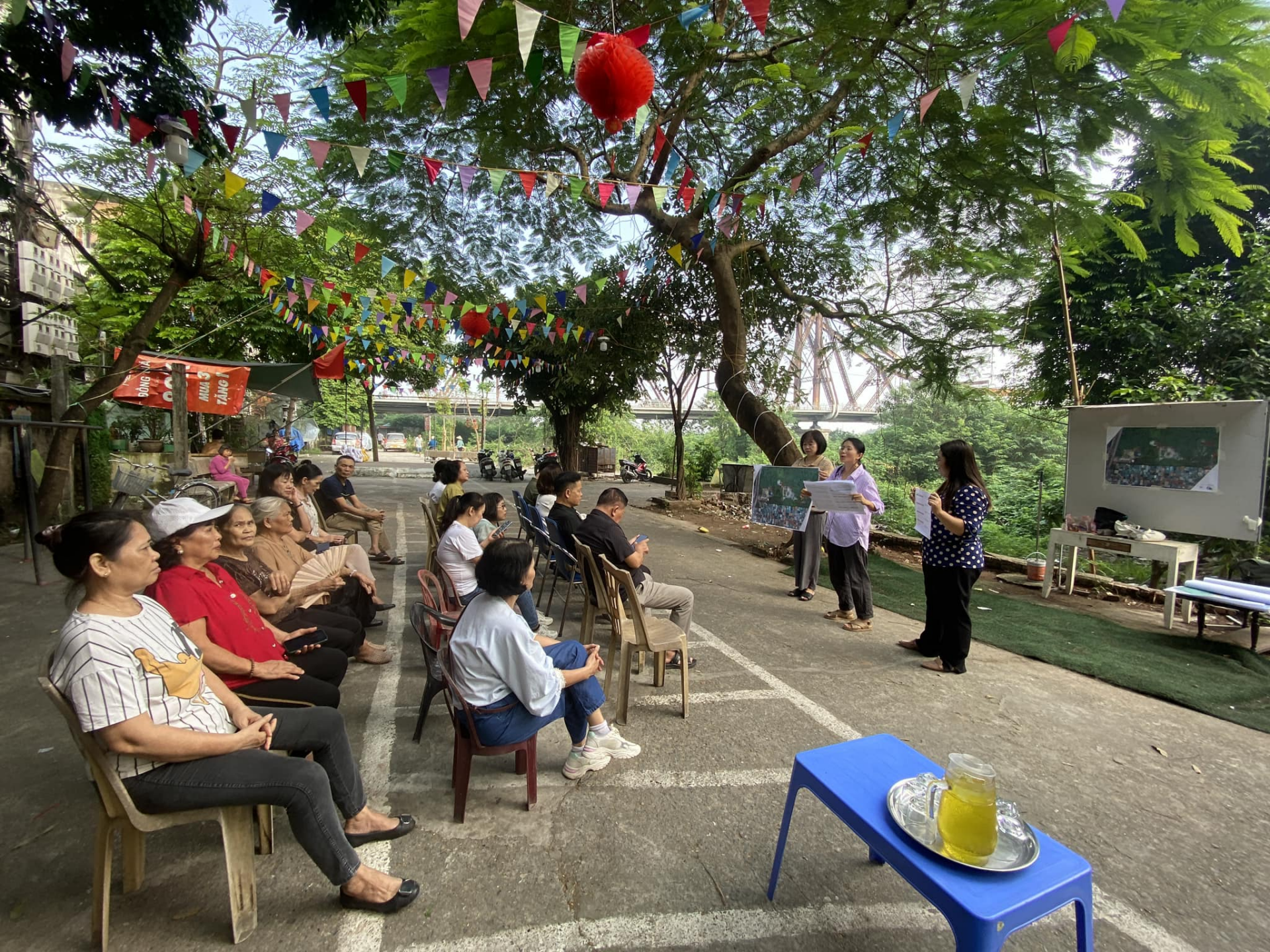
Community consultation session before constructing Công Viên Rừng Trong Phố Bờ Vở in 2023 (Photo: Think Playgrounds!)
The initiative formalized as social enterprise TPG in 2017. By late 2024, TPG had built over 270 public spaces nationwide, including the ambitious Công Viên Rừng Trong Phố Bờ Vở along the Red River in central Hanoi. In a socially complex area within flood protection corridors with waste issues, this community-involved forest park connects people for shared activities while raising biodiversity awareness. Unlike other urban projects, it features effective local interaction and genuine resident participation in implementation and outcomes. Today, TPG combines community events with design consulting, owning its workshop focused on recycled materials, committed to spaces for both people and nature.
Trương Uyên Ly
Trương Uyên Ly, an independent researcher on culture and creative arts, is a familiar name in the field over many years. After nearly a decade as a culture and arts reporter for Tuổi Trẻ newspaper in the 2000s, she became an independent journalist and researcher, “wandering” through the creative industry nationwide. In 2014, she mapped Vietnam’s creative spaces for the British Council, reported on policy and spaces in 2016, and updated the map in 2018.
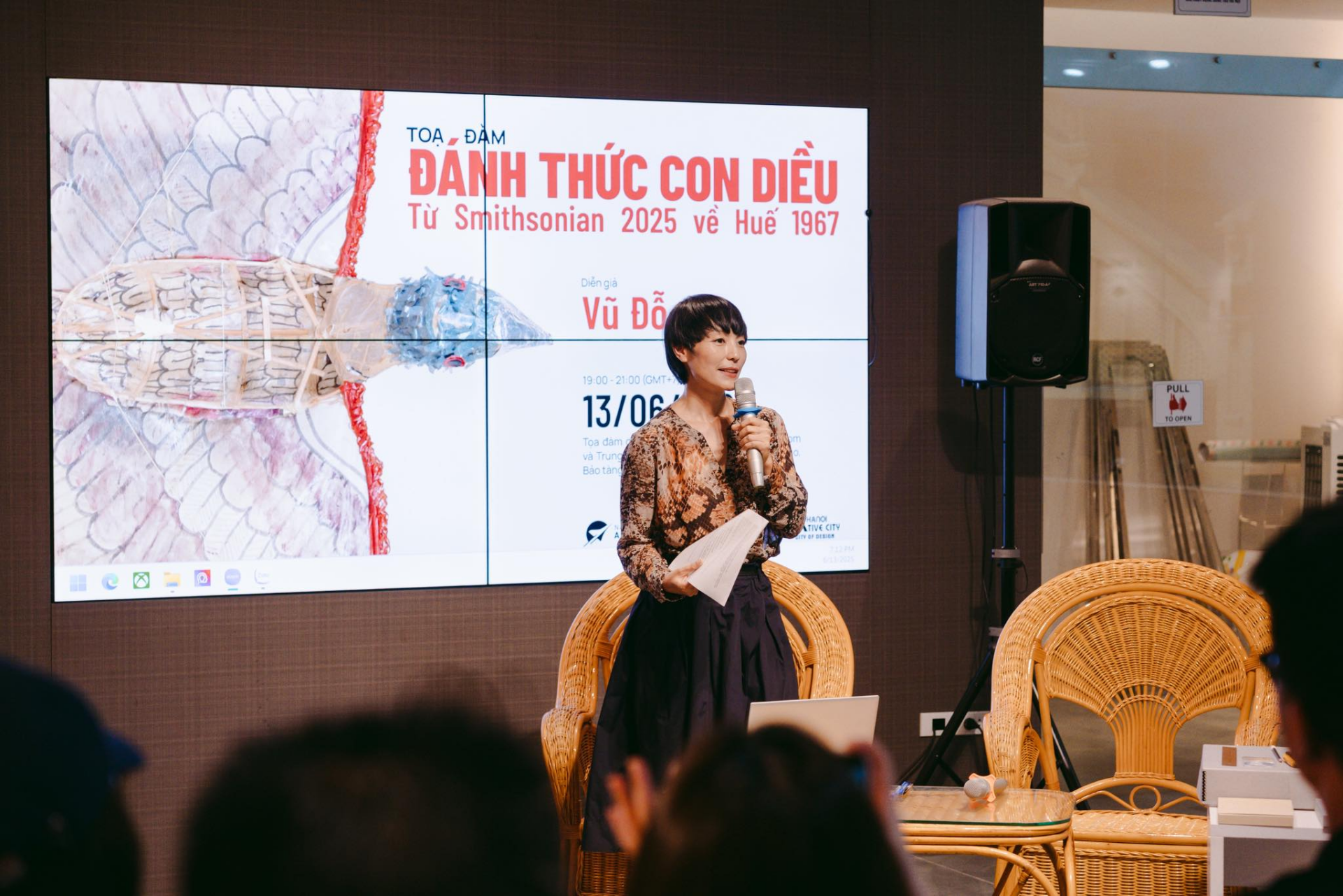
Trương Uyên Ly leading an event at the Hanoi Creative Hub Coordination Center in June 2025 (Photo: Researcher Vũ Đỗ)
For this creative industry mapping, compared to 10 years ago, Ly now sits as an interviewee, sharing her views on the trajectory of domestic creative industries and future hopes. Before 2018, most cultural initiatives were spontaneous without long-term plans; from 2018–2021, a shift toward structured, sustainable frameworks emerged. Since then, projects and creatives have become more professional. Ly sees “spaces for culture and creativity” as meeting and exchange points offering educational and potential economic value. For success, public and private sectors need tighter communication and systematic collaboration. Combining stable public financial/infrastructural resources with private experimentation and dynamism could create true growth for the field.
About the “Creative Vision” Publication
“Creative Vision 2025” is a program by the British Council to update the map of Vietnam’s creative ecosystem, supporting the National Strategy for Cultural Industries Development to 2030, with a vision to 2045. It identifies influential individuals and organizations across visual arts, performance, design, architecture, fashion, and community support models. The main goal is to reflect new trends, strengths, challenges, and public-private collaboration potential. The project also fosters Vietnam-UK connections through knowledge exchange, capacity building, and sustainable initiatives. The publication builds a comprehensive view of Vietnam’s creative sector while expressing hopes for robust growth in art and design communities soon.
The publication launched in Hanoi on September 27, Da Nang on September 19, and Ho Chi Minh City on December 19, 2025.
Read the full publication here: https://www.britishcouncil.vn/cac-chuong-trinh/nghe-thuat/tam-nhin-sang-tao-2025