Vietnam: Developing Cultural Industries – Opportunities to Build a Sustainable Creative Ecosystem
Vietnam’s cultural industries are entering a period of robust growth with numerous highlights across cinema, design, music, and creative craft villages. However, behind this vibrancy, a reality persists: the value chain remains fragmented, lacking connectivity between creativity, production, distribution, markets, and reinvestment. The question arises: What are the bottlenecks preventing this growth momentum from becoming a sustainable driver for Vietnam’s creative economy?
The Current Landscape: Rapid Growth but Fragmented Value Chains
In recent years, cultural industries have emerged as a new bright spot in Vietnam’s economy. After five years of implementing the Strategy for the Development of Cultural Industries to 2020, with a vision to 2030, the sector’s contribution to GDP increased from 2.68% in 2015 to 3.61% in 2018, exceeding the 3% target set for 2020. According to statistics from the Ministry of Culture, Thao, and Tourism announced at a five-year review conference, Vietnam’s 12 cultural industry sectors generated over $8 billion in revenue. Many cultural products have won the hearts of domestic and international audiences, and the number of businesses and establishments in the creative sector has increased by an average of over 7% per year, providing livelihoods for approximately 2 million workers. According to the UNESCO Creative Economy Outlook report, Vietnam is also among the leading developing countries in terms of creative goods exports.
Each sector within the cultural industries has made a distinct mark. According to estimates from the Cinema Department, the film industry recorded a box office revenue of 4,100 billion VND in 2023 and witnessed an even stronger surge in 2024, with revenue reaching 4,418 billion VND—surpassing even the pre-pandemic golden era. This growth indicates the increasingly diverse cultural tastes of the Vietnamese people and confirms that the cinema industry is progressively asserting its vital role in both spiritual and economic life.
The gaming industry has also emerged as a prominent highlight. Bloomberg ranked Vietnam among the top 5 countries with the highest revenue in Southeast Asia and the top 5 globally for mobile game production in 2023, with over 4.2 billion downloads worldwide—2.5 times higher than the global average. The domestic player base has grown significantly, with revenue reaching 525 million USD by the end of 2024, while international revenue for Vietnamese game developers exceeded 2,000 billion VND. The average growth rate of the Vietnamese gaming industry is projected to reach nearly 10% annually, potentially hitting 2.42 billion USD by 2029.
In the field of handicrafts—a sector deeply rooted in Vietnamese cultural identity and a key export pillar of the cultural segment—annual export value is estimated at approximately 1.7 billion USD, according to the Vietnam Craft Village Association. Products such as ceramics, woodwork, bamboo weaving, and lacquerware continue to be favored in numerous international markets, demonstrating the enduring vitality of traditional craft villages in the context of global integration.
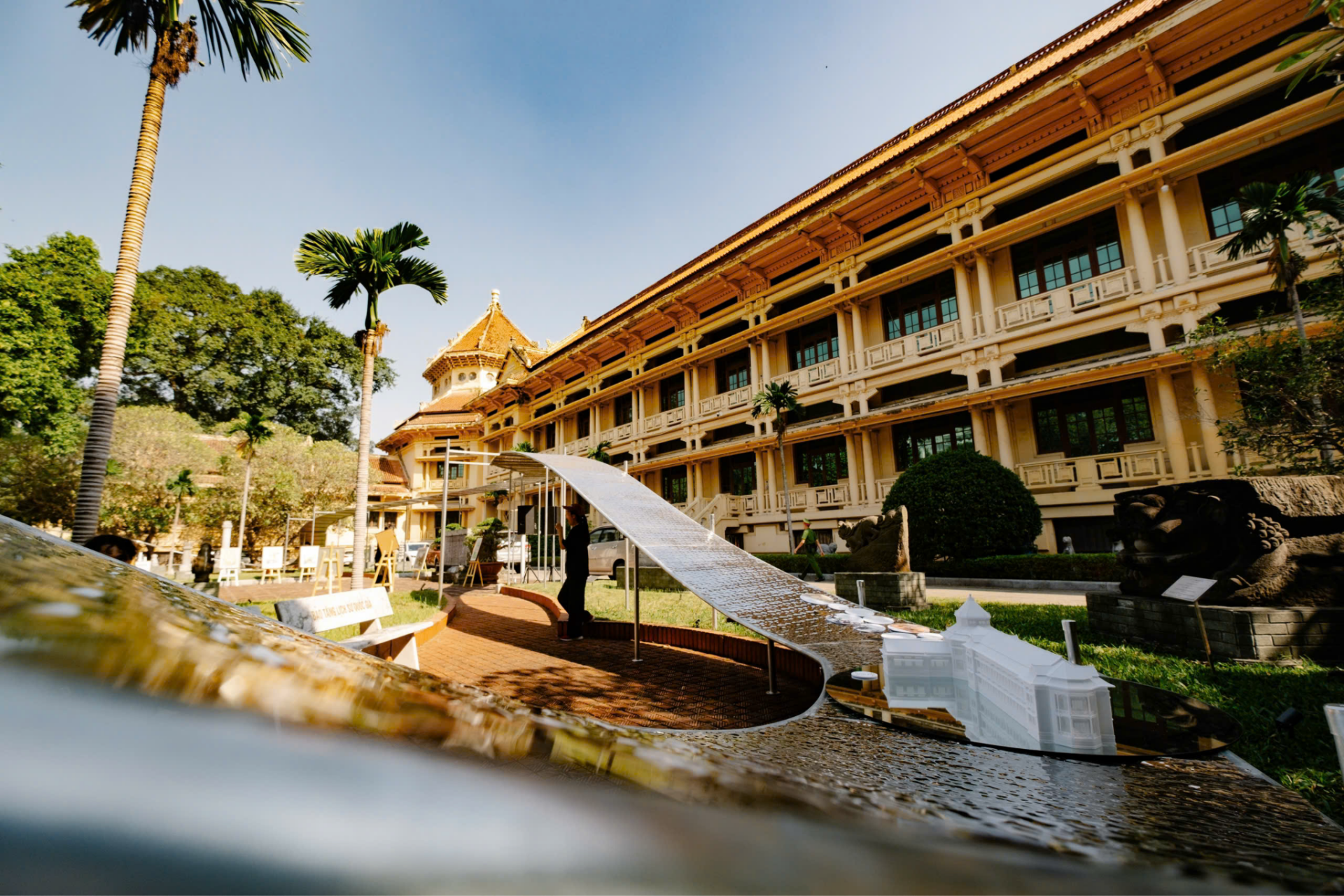
Hanoi serves as a clear testament to the potential of transforming cultural resources into economic benefits. With a high density of monuments, a rich heritage system, and abundant creative resources, Hanoi is regarded as the exemplary locality for cultural industry development. In its role as a Creative City within the UNESCO Network, Hanoi has undergone a powerful transformation, with cultural industries contributing nearly 1.5 billion USD, equivalent to 3.7% of its GRDP.
Photo: Organizing Committee of the Hanoi Creative Design Festival
In 2018, revenue from cultural industries in Hanoi reached 1.49 billion USD, with the arts, entertainment, and recreation sector alone accounting for 196.5 million USD. Hanoi’s traditional craft villages also contributed nearly 1 billion USD in direct revenue and provided livelihoods for approximately 1 million workers. The city’s export turnover for handicrafts reached 192 million USD, reflecting the significant competitiveness of local cultural products in the international market.
Photo: Organizing Committee of the Hanoi Creative Design Festival
Furthermore, Hanoi has emerged as a premier cultural tourism destination. In 2019, the city welcomed nearly 29 million visitors, which accounted for one-third of the country’s total tourist volume and included over 7 million international arrivals. Annually, Hanoi is consistently voted as a leading destination in Asia and the world. During the period from 2015 to 2020, the city’s economic structure shifted toward a rapid increase in the service sector’s share, rising from 57.2% to 64.1% of GRDP. Consequently, Hanoi maintained a steady growth rate of nearly 7% per year, with GRDP per capita reaching 5,325 USD in 2020. This serves as a vital foundation for the Capital to continue leveraging its cultural identity to drive the growth of creative industries.
Rapid Growth Does Not Equate to Sustainable Development
Despite positive results, Vietnam’s cultural industries have yet to form a complete value chain. Current development relies primarily on isolated components operating independently, lacking the synergy required to create collective strength.
A concerning reality is that the majority of enterprises in the cultural and creative sectors are small or micro-sized. This fragmentation makes it difficult for them to invest long-term in technology, intellectual property, and high-quality human resources. In many sectors, despite having high-quality products, the lack of production and distribution infrastructure prevents scaling. This is particularly evident in cinema and animation, where Vietnam has only a few international-standard studios, leaving major productions heavily dependent on foreign partners.
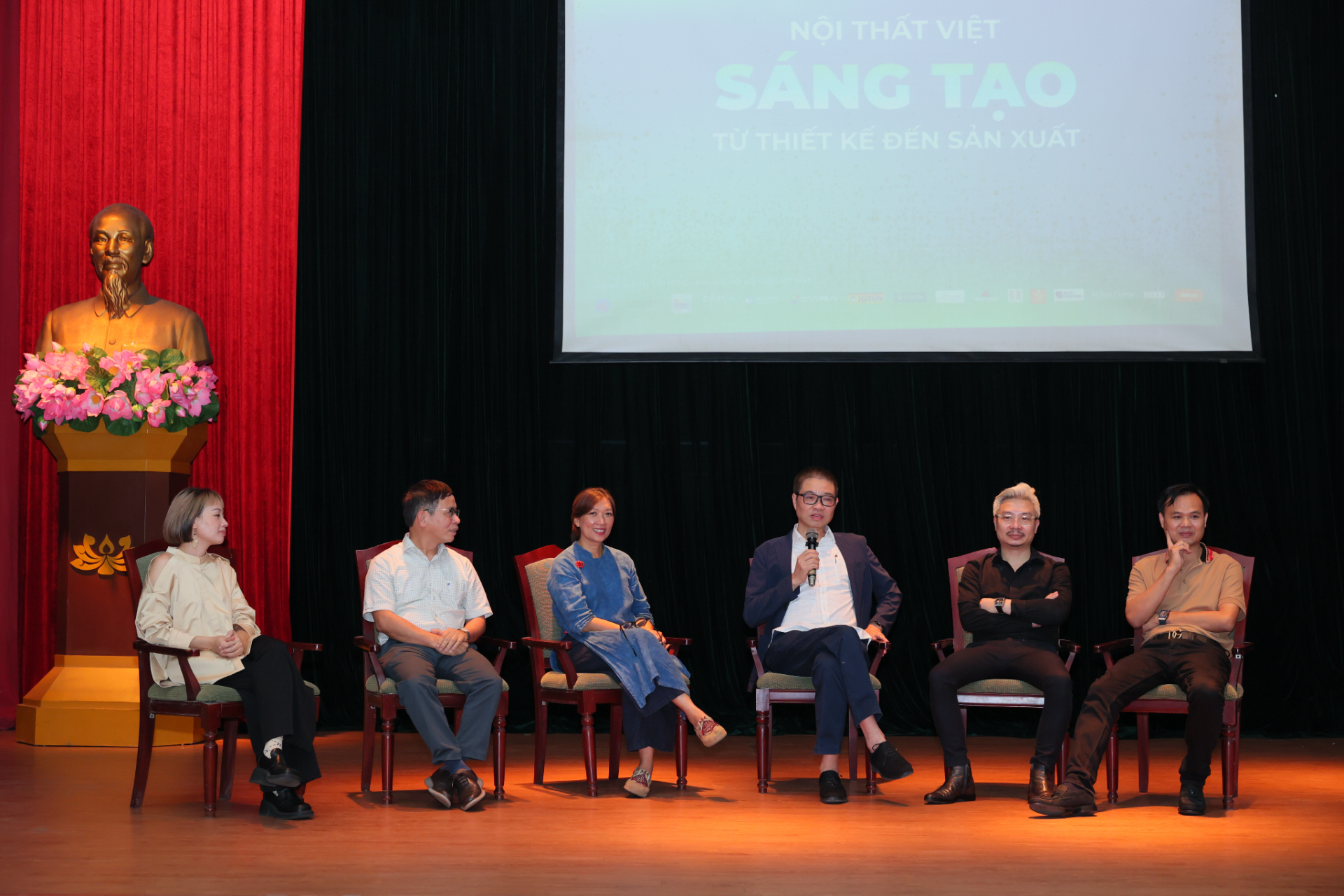
Photo: Organizing Committee of the Hanoi Creative Design Festival
The domestic market, despite its expansion, remains insufficient to sustain a reinvestment cycle. Vietnamese consumers allocate a low percentage of their income to cultural products, making it challenging for businesses to develop high-added-value offerings. Experts such as Truong Minh Tien and Dr. Do Dinh Duc both point out that Vietnam lacks a specialized policy framework for cultural industries—ranging from tax incentives, credit access, and investment funds for creative enterprises to land policies for cultural spaces—all of which dampen corporate motivation.
Furthermore, ‘soft infrastructure,’ including creative space systems, cultural institutions, and support networks, remains both insufficient and underdeveloped. Many creative spaces operate spontaneously and lack long-term patronage. Some cultural industrial park models are still in the experimental stage, lacking the necessary influence to drive the entire sector forward.
What is the Creative Ecosystem Missing to ‘Take Off’?
Reality demonstrates that Vietnam possesses the requisite conditions for cultural industries to become a key economic pillar. However, for this to materialize, the sector requires a more tightly integrated value chain: from creativity and production to consumption and reinvestment.
The challenge lies not only in increasing revenue or expanding the scale of individual industries but in establishing a sustainable ecosystem where creative ideas are nurtured, cultural products are manufactured within a robust infrastructure, the market has sufficient absorptive capacity, and policies are flexible enough to incentivize growth.
When these links are interconnected, Vietnam’s cultural industries will transition from being a short-term, fast-growing sector to becoming a long-term driver that makes a tangible contribution to the national economy.
Source
- https://unctad.org/system/files/official-document/ditctsce2022d1_en.pdf
- https://tienphong.vn/phim-viet-uoc-dat-hon-4400-ty-dong-trong-nam-2024-post1697067.tpo?utm_source=chatgpt.com
- https://bvhttdl.gov.vn/game-viet-nam-dung-cong-nghiep-phan-mem-de-quang-ba-van-hoa-20251022152422153.htm
- https://en.vietnamplus.vn/craft-industry-posts-17-billion-usd-in-annual-export-value-post112441.vnp?utm_source=chatgpt.com
- https://daibieunhandan.vn/cu-hich-moi-cho-cong-nghiep-van-hoa-10396028.html
- https://www.tapchicongsan.org.vn/web/guest/thuc-tien-kinh-nghiem1/-/2018/827664/chinh-sach-phat-trien-cac-nganh-cong-nghiep-van-hoa–cua-thanh-pho-ha-noi.aspx